Products / Freeze-Dried Vegetables & Herbs
Organic • Kosher options • Non-GMO
Freeze-Dried Vegetables & Herbs
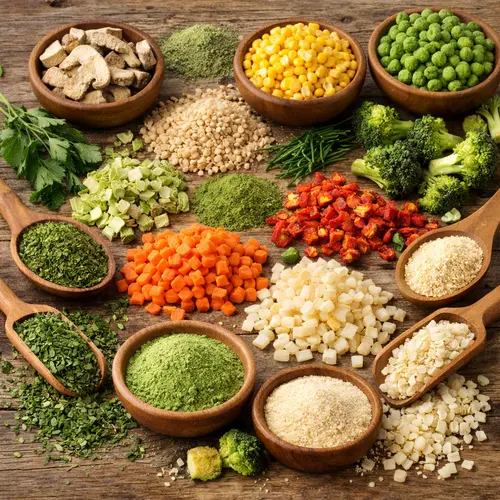
Wholesale supply for freeze-dried vegetables & herbs with organic options, documentation support, and custom processing formats for USA & Canada buyers. Freeze-dried ingredients are often selected for rapid rehydration, strong aroma retention, and lightweight handling—ideal for dry soup blends, seasonings, snack inclusions, and ready-to-eat applications where you want “fresh-like” notes without refrigerated logistics.
Fast
rehydration in hot or cold systems
Light
weight ingredients for efficient handling
Clean
label-friendly vegetable & herb components
Flexible
cuts sized to your inclusion needs
On this page
Jump to typical items, cut formats, application guidance, quality documentation, and the quote form.
Typical items in this category
This category includes common freeze-dried vegetables and herbs used in dry mixes, seasoning systems, snacks, and convenience foods. Availability, origin, and cut formats vary. If you need a specific particle size range (granules vs powder), a defined dice size, or an herb leaf-to-stem expectation, include those details in your request.
| Ingredient | Common formats | Typical use cases | Notes |
|---|---|---|---|
| Asparagus | Pieces, slices, powder (as applicable) | Soups, specialty blends | Ask about piece size and color expectations |
| Basil | Leaf, crushed, powder (as applicable) | Seasoning, sauces, snacks | Specify leaf cut and aroma targets |
| Beets | Dices, granules, powder (as applicable) | Color systems, soups, blends | Powder particle size can affect dispersion |
| Broccoli | Florets/pieces, powder (as applicable) | Soups, snack inclusions | Ask about fines limits if you need clean pieces |
| Cabbage | Pieces, flakes, powder (as applicable) | Soup bases, savory blends | Share texture targets after rehydration |
| Carrot | Dices, slices, granules, powder (as applicable) | Soups, rice blends, seasonings | Common in “mirepoix” style mixes |
| Cauliflower | Pieces, powder (as applicable) | Soups, savory blends | Powder is often used for body and flavor |
| Celery | Pieces, flakes, powder (as applicable) | Soup and seasoning systems | Specify intensity needs (celery can be strong) |
| Chives | Cut, flakes, powder (as applicable) | Seasonings, dips, toppings | Ask about cut length and color |
| Corn | Kernels/pieces, powder (as applicable) | Soups, snacks, blends | Tell us if you need kernel integrity |
| Garlic | Minced, granules, powder (as applicable) | Seasonings, sauces, marinades | Granule vs powder impacts release and dusting |
| Green Beans | Pieces, cuts, powder (as applicable) | Soups, meal kits | Share rehydrated bite expectations |
| Kale | Pieces, flakes, powder (as applicable) | Functional blends, soups | Powder color can vary by crop |
| Leeks | Rings/pieces, flakes, powder (as applicable) | Soup bases, savory blends | Often paired with onion/garlic systems |
| Mushrooms | Slices, pieces, powder (as applicable) | Umami systems, soups, seasonings | Specify type if you need a particular profile |
| Onions | Dices, minced, granules, powder (as applicable) | Soups, seasoning blends, snacks | Cut size affects rehydration speed |
| Oregano | Leaf, crushed, powder (as applicable) | Seasonings, sauces | Ask about leaf cut and aroma targets |
| Parsley | Leaf, flakes, powder (as applicable) | Soups, seasonings, dips | Color retention can be important for visuals |
| Peas | Whole/pieces, powder (as applicable) | Soups, rice blends, snacks | Specify whole vs split preference |
| Peppers | Dices, strips, granules, powder (as applicable) | Seasonings, soups, blends | Tell us if you need heat vs sweet profiles |
| Potatoes | Dices, flakes, granules, powder (as applicable) | Soups, instant systems | Share viscosity/body targets in finished product |
| Zucchini | Pieces, slices, powder (as applicable) | Soups, savory blends | Ask about cut thickness for rehydration |
| Pumpkin | Pieces, powder (as applicable) | Seasonal blends, soups | Powder particle size impacts dispersion |
| Shallot | Minced, granules, powder (as applicable) | Premium savory systems | Often used for cleaner allium notes |
| Spinach | Pieces, flakes, powder (as applicable) | Functional blends, soups | Color can vary—share target range |
| Squash | Pieces, powder (as applicable) | Soups and seasonal blends | Ask about sweetness and color expectations |
| Thyme | Leaf, crushed, powder (as applicable) | Seasonings and sauces | Specify leaf cut and aroma targets |
| Tomato | Pieces, granules, powder (as applicable) | Seasonings, soups, savory blends | Ask about acidity and color expectations |
Note: Freeze-dried items are often specified by cut size, sieve/mesh distribution (for granules/powders), color, aroma, and rehydration behavior. If you have internal spec limits for fines or dusting, include them in your request.
Rapid rehydration
Freeze-dried vegetables and herbs typically rehydrate quickly, making them useful for instant soups, cups, dry meal kits, and quick-cook blends.
- Pieces that rehydrate without long simmer
- Powders that disperse into systems
- Granules that control flavor release
Aroma & color retention
Many buyers choose freeze-dried ingredients to maintain a “fresh-like” aromatic top note and appealing visuals in finished blends.
- Herb-forward seasoning systems
- Visible vegetable inclusions
- Clean-label positioning
Cut formats for your line
We can support common diced, sliced, granule, and powder formats, plus blends tailored to consistent distribution in your mix.
- Defined dice sizes for inclusions
- Granule mesh ranges for seasonings
- Powders for dispersion and body
Formats & specification considerations
The best cut depends on your application, mixing equipment, and desired rehydration speed. Below are common specification levers buyers use when sourcing freeze-dried vegetables and herbs.
Dices & pieces
Dices provide visible inclusions and controlled bite. Many soup blends and meal kits specify dice size to ensure consistent rehydration and appearance.
- Dice size: impacts rehydration time and mouthfeel
- Fines limits: reduces dusting and improves blend uniformity
- Color range: important for consumer perception in clear systems
- Rehydration behavior: evaluate in your water activity and temperature conditions
- Fragility: freeze-dried pieces can fracture under high shear mixing
Tip: If you use high-speed blending, consider a more durable cut or add fragile inclusions later in the process.
Slices, flakes, and leaf cuts (herbs)
Leafy herbs and thin slices deliver strong aromatics and visual garnish. Specs often focus on leaf cut, stem content, and color.
- Cut style: leaf, crushed, flakes; slice thickness for vegetables
- Stem content: especially relevant for herbs
- Aroma intensity: can vary by origin and harvest
- Color retention: critical for green herbs
- Mixing tolerance: thin leaf cuts can powder under shear
Tip: For “top note” herb systems, choose a leaf cut that releases aroma quickly without turning to dust in packaging.
Granules
Granules are popular in seasoning blends because they reduce dusting compared to powders while still dispersing quickly. They can also provide controlled release and visual texture.
- Mesh/sieve distribution: key to consistent blend performance
- Flowability: important for automated dosing and augers
- Dusting control: improves worker handling and packaging cleanliness
- Hydration speed: granule size can affect “bloom” time
- Blend compatibility: match granule size to other seasoning components
Tip: If you’re blending with salt and spices, matching particle size helps reduce segregation in transit.
Powders
Powders are used for dispersion, body, and flavor loading in dry mixes. They’re effective, but may require dust control and careful mesh selection to prevent clumping.
- Particle size: impacts dispersion and clumping
- Moisture sensitivity: powders can pick up humidity quickly
- Static/dusting: consider handling controls on production line
- Color and flavor strength: can be more concentrated than pieces
- Application fit: great for dressings, seasonings, and functional blends
Tip: If you need reduced dusting, consider granules or a slightly coarser powder mesh (application dependent).
How buyers use freeze-dried vegetables & herbs
Freeze-dried inclusions help deliver flavor and visuals in dry formats. Buyers often choose freeze-dried vegetables and herbs when they want rapid rehydration and “fresh-like” aromatic notes without chilled handling.
Soups & cups
- Vegetable dices for visible inclusions
- Herbs for top-note aroma
- Powders for body and base flavor
Seasoning blends
- Garlic/onion granules to reduce dust
- Herb flakes for label appeal
- Custom particle sizing for uniform blends
Snacks
- Vegetable powders for flavoring systems
- Herb systems for savory coatings
- Controlled release of aroma and taste
Meal kits & mixes
- Mirepoix-style blends (carrot/celery/onion)
- Allium systems (onion/garlic/leek/shallot)
- Vegetable + herb combinations for fast prep
Custom blends for freeze-dried vegetables & herbs
Many buyers prefer blended inclusions to reduce inbound SKUs and improve batch consistency. We can support custom blends (availability dependent) and help align cut sizes to reduce segregation and improve dosing performance.
Common blend concepts
- Mirepoix blends: carrot + celery + onion
- Herb blends: parsley + basil + oregano + thyme
- Allium blends: onion + garlic + leek/shallot
- Vegetable medleys: peas + corn + carrots
- Soup kits: vegetables + herbs sized for fast rehydration
Blend specification levers
- Target ratios by weight (e.g., 40/30/30)
- Aligned particle sizing to reduce segregation
- Fines control for cleaner packaging and dosing
- Color and aroma targets for consistent appearance
- Documentation and labeling requirements
Best practice for programs
- Lock a baseline spec (mesh, fines, color)
- Plan forecast releases to reduce variability
- Validate rehydration in your exact system
- Confirm handling needs (humidity control)
- Build a sampling and approval path
If you already have a blend spec, share it. If not, describe your finished-product texture (bite), rehydration time, and visual target, and we’ll propose practical options.
Quality, food safety & documentation
Manufacturers typically require consistent QA documentation for supplier approval and receiving release. Where supported by the supplier program, we can provide common documents and help align the product to your internal spec.
Common documents (as available)
- COA (lot-level where offered)
- Specification sheets
- Allergen statements
- Non-GMO statements (program-dependent)
- Organic certificates for organic items
- Kosher certificates for certified items
Common QA focus areas
- Moisture and water activity expectations
- Particle sizing distribution for granules/powders
- Fines limits and visual cleanliness
- Color, aroma, and sensory consistency
- Foreign material controls and screening
If you have a vendor onboarding packet or audit questionnaire, attach it to your request.
Traceability support
- Lot coding and packaging identifiers
- Origin and supplier program details (where applicable)
- Receiving guidance aligned to your SOPs
- Repeat program planning support
- Change notification expectations (when available)
Storage & handling tips for freeze-dried ingredients
Freeze-dried vegetables and herbs can quickly absorb moisture from air. Proper storage and production handling helps maintain crispness, flowability, and aroma.
Warehouse storage
- Keep sealed and protected from humidity
- Store cool and dry, away from strong odors
- Use FIFO and record lot codes for traceability
- Maintain pest-control readiness for dry goods
Production handling
- Minimize open-air exposure time
- Reseal opened bags promptly
- Add fragile pieces late in mixing if possible
- Control dust when using fine powders
Blending considerations
- Match particle sizes to reduce segregation
- Confirm flowability for augers and feeders
- Check rehydration in your finished matrix
- Set receiving inspection checks (fines, color)
Storage recommendations can vary by ingredient and packaging. Ask for product-specific guidance if you’re targeting a defined shelf life.
Request a quote for freeze-dried vegetables & herbs
Share the details below and we’ll respond with available options for your target volume in the USA or Canada. This form pre-fills into your main contact workflow for faster handling.
Quick quote details
FAQ
Do you offer organic options for Freeze-Dried Vegetables & Herbs?
Many items in this category have organic options. Tell us the ingredient(s), format (diced/granules/powder), volume, and delivery lane, and we’ll confirm what’s currently available.
Can you supply bulk packaging?
Yes—bulk and wholesale pack sizes are available depending on the ingredient and cut. Share your preferred pack format and warehouse constraints (pallet height, dock type, appointment requirements) so we can align the best option.
Do you support custom processing?
Often yes. Depending on the ingredient, we can support custom cut sizes (dices/slices), granulation windows for granules, powders, and custom blends designed for consistent distribution in your mix.
What’s the difference between freeze-dried and air-dried ingredients?
Freeze-dried ingredients are typically chosen for rapid rehydration and aromatic “fresh-like” notes. Air-dried ingredients can be denser and may rehydrate more slowly. The right choice depends on your application and performance targets.
How should freeze-dried ingredients be stored?
Store sealed in a cool, dry place and protect from humidity. Limit open-air exposure during production and reseal opened packaging promptly, since freeze-dried ingredients can absorb moisture quickly.
Can you provide documentation for QA onboarding?
Where available, we can provide typical documents such as COA, specifications, allergen statements, and applicable certificates (organic/kosher). If you have a vendor onboarding packet, include it with your request.
Which format is best for seasoning blends?
Granules are commonly used to reduce dusting while still dispersing quickly, and powders are used when you need uniform dispersion and higher flavor loading. For visual appeal, flakes and small pieces can be used when blend segregation is controlled.
Ready to source freeze-dried vegetables & herbs?
Whether you need diced vegetables for soups, granules for seasoning blends, or herb flakes for label appeal, we can help you align the right cut format, documentation set, and delivery plan for your production program.
For urgent requests, include ingredient, format, volume, destination, and any certification needs so we can respond with the most relevant options.