Home / Products / Freeze-Dried Vegetables & Herbs / Carrot
Wholesale ingredient • Documentation support • Cut-size & format flexibility
Carrot
Wholesale supply for Carrot ingredients with consistent cut sizes, documentation support, and flexible formats for USA & Canada manufacturers, brands, and co-packers.
Fast quote checklist
Include: process (freeze-dried or dehydrated), format (diced/flakes/granules/powder), target cut size (mm range / sieve), color expectations (if critical), packaging, annual volume, and delivery region.
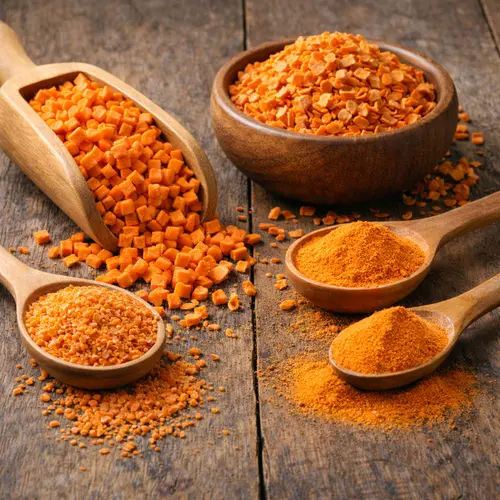
Why carrot is used in dry and shelf-stable formulations
Carrot ingredients bring natural sweetness, color, and vegetable character to a wide range of applications. In dried formats, carrots are easy to store, dose, and blend—making them a popular choice for seasoning systems, instant meals, snack blends, and dry mixes.
- Flavor support: mild sweetness that rounds out savory seasoning profiles.
- Natural color: orange hue for soups, blends, and snack mixes (program dependent).
- Format flexibility: from visible dices to fine powders for uniform dispersion.
- Operational efficiency: shelf-stable ingredient options with consistent dosing.
If your application is sensitive to hydration time or texture, tell us your process conditions so we can suggest a format.
What buyers typically specify
To avoid line issues and to match finished product appearance, buyers often specify carrot by both process (freeze-dried vs. dehydrated) and particle size.
- Process type: freeze-dried (lightweight, quick rehydration) vs. dehydrated (cost-efficient, robust handling).
- Cut size: dice size (mm range), flake size, or granules (screen range).
- Powder fineness: sieve/mesh targets for blending and dispersion.
- Color targets: important when carrots are visible in the finished product.
- Moisture / water activity targets: important for clumping control and shelf stability.
Note on format selection
Freeze-dried ingredients are often chosen for quick rehydration and bright appearance, while dehydrated formats can be a strong choice for durable handling and cost control. Availability varies by program.
Common formats
- Carrot dices (various sizes)
- Carrot slices (as applicable)
- Carrot flakes
- Carrot granules
- Carrot powder
Need a specific mm dice, flake size, or sieve range? Include it in your quote request.
Processing options
- Freeze-dried: lightweight, typically fast rehydration; often used where appearance matters.
- Dehydrated: robust handling for blends; commonly used in seasonings, soups, and dry mixes.
- Custom milling: powder fineness targets for uniform dispersion (program dependent).
- Blends: vegetable blends for soups/seasoning systems may be available with volume.
Tell us your application (soup, snack blend, seasoning) and we’ll help select the best format.
Packaging (typical)
- Bulk bags or cases (program dependent)
- Moisture-protective liners for powders/granules
- Palletized shipments for distribution and manufacturing receiving
- Labeling and pallet configuration support
Powders are more moisture-sensitive—share your receiving and storage conditions so we can recommend packaging.
Applications
Carrot ingredients are used across savory blends and prepared foods to add vegetable identity, color, and mild sweetness. The best format depends on whether you want visible pieces, fast hydration, or uniform dispersion.
Soups, sauces & prepared meals
- Instant soups, cup meals, ramen toppings (dices/flakes)
- Dehydrated meal kits and bouillon blends (granules/powder)
- Sauce and gravy systems (powder for dispersion)
- Vegetable blends for dry bases and seasoning sachets
Seasonings, snacks & dry blends
- Snack seasoning blends (powder or fine granules)
- Trail mixes and snack inclusions (larger dices/flakes)
- Dry rubs and savory seasoning systems (powder/granules)
- Co-packed dry mixes requiring lot traceability and documentation
Bakery & specialty uses
- Carrot cake and bakery mixes (powder or fine granules)
- Vegetable-forward inclusions for savory baked goods (flakes)
- Color-forward applications where carrot provides natural hue (program dependent)
R&D and line trials
- Hydration-time tuning using different cut sizes
- Reducing fines/dust in seasoning lines by adjusting granulation
- Appearance optimization (visible dice vs. subtle powder)
Quality & documentation support
We support buyer QA teams with documentation commonly used for vendor approval, receiving, and audits.
- COA (Certificate of Analysis): lot-linked testing data as available by program.
- Specification sheet: format, cut size, moisture guidance, and storage recommendations.
- Traceability: lot and shipment documentation for inventory control.
- Certifications: organic and kosher options where available.
If you have a vendor onboarding questionnaire, send it with your quote request.
Handling, storage & shelf-life guidance
Dried vegetable ingredients can absorb moisture and odors. Good storage practices help prevent clumping, preserve color, and maintain consistent rehydration.
- Storage: cool, dry environment; protect from humidity and strong odors.
- Packaging: keep liners sealed; re-close partials promptly to reduce moisture pickup.
- Rotation: FIFO with clear lot tracking and segregation.
- Production staging: minimize open exposure in high-humidity areas, especially for powders.
Shelf life varies by format and packaging—request the current shelf-life statement with your quote.
How to request pricing (and get an accurate match)
1) Choose process and format
- Freeze-dried vs. dehydrated
- Dices, flakes, granules, or powder
- Target cut size (mm) or sieve range
2) Share performance needs
- Target hydration time (if critical)
- Visibility requirements (visible pieces vs. background flavor/color)
- Dust/fines tolerance for seasoning lines
3) Provide logistics & QA requirements
- Annual volume estimate and order cadence
- Packaging preference (bags/cases) and pallet requirements
- Delivery region (USA/Canada) and timing expectations
- Documentation needs (COA/spec/traceability; organic/kosher if required)
Tip
If you’re matching an existing carrot ingredient, sharing your current spec sheet (even partially redacted) helps us align cut size and performance faster.
Specification highlights (typical request fields)
Actual specs are program-specific. Use the checklist below to communicate requirements clearly.
| Spec field | Examples / notes | Why it matters |
|---|---|---|
| Process | Freeze-dried or dehydrated | Impacts hydration behavior and appearance |
| Format | Dices, slices, flakes, granules, powder | Controls visibility, dosing, and blend performance |
| Cut size / sieve | mm dice size, flake size, screen range | Affects uniformity and rehydration time |
| Moisture / aw | Specify max targets if needed | Reduces clumping and improves shelf stability |
| Color expectations | Important when pieces are visible | Supports consistent finished product appearance |
| Packaging | Bags/cases; pallet configuration | Receiving efficiency and warehouse handling |
| Documentation | COA, spec sheet, traceability | Vendor approval and QA recordkeeping |
| Certifications | Organic, kosher (where available) | Supports labeling and customer requirements |
If you’d like, paste your internal spec fields into the quote form and we’ll map them to available carrot options.
FAQ
What carrot formats do you supply (freeze-dried vs. dehydrated)?
We can source carrot ingredients in formats such as freeze-dried and/or dehydrated depending on availability, including diced, slices, flakes, granules, and powder. Tell us your application and we’ll recommend the best option.
Do you support specific cut sizes and sieve ranges?
Yes—many programs offer defined cut sizes or sieve ranges. Share your target particle size, visual needs, and processing constraints and we’ll match an option.
Do you have minimum order quantities (MOQs)?
MOQs vary by format (diced vs. powder), processing type, and packaging. Provide your target volume and delivery region and we’ll respond with MOQ and lead-time options.
Can I request organic and conventional pricing?
Yes. Where available, we can provide organic and conventional options so you can compare cost and labeling.
What documentation is typically available?
Common documents include a Certificate of Analysis (COA), product specification sheet, and lot traceability documentation. Additional documentation may be available by request.
Related categories
Browse categories where this ingredient is commonly sourced:
Freeze-Dried Vegetables & Herbs Dehydrated Vegetables Organic
Looking for a full soup/seasoning blend set (onion, garlic, celery, herbs)? Browse the product catalog for cross-sourcing.
Request a quote for Carrot
Share process (freeze-dried or dehydrated), format (dices/flakes/granules/powder), cut size/sieve range, certification needs (organic/kosher if required), annual volume estimate, and delivery region (USA/Canada).
Request Pricing