Home / Products / Coconut Ingredients / Toasted Coconut
Wholesale ingredient • Documentation support • Controlled toast level • USA & Canada
Toasted Coconut
Wholesale supply for Toasted Coconut with consistent specs, food safety documentation support, and flexible cut formats for manufacturers, brands, and co-packers across the United States & Canada.
Need consistent browning for a topping or a toasted note inside a bar or cookie? Share your target toast level (light/medium/dark), cut (shred/flake/chip), and application so we can match an option that holds up in your process.
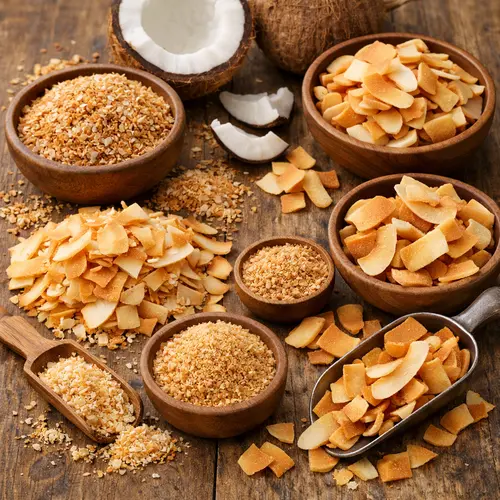
What it is
Toasted coconut is coconut meat that has been cut (shredded, flaked, or chipped) and then toasted to develop color, aroma, and a deeper flavor profile. Compared to non-toasted coconut, toasted formats deliver a more pronounced nutty/caramelized note and a visually appealing golden-to-brown appearance for toppings and inclusions.
Why manufacturers use toasted coconut
- Flavor impact: richer, toasted aroma and deeper coconut flavor
- Visual identity: golden-brown color cues for premium positioning
- Texture: crisp-to-chewy behavior depending on cut, moisture, and finished product system
- Convenience: reduces the need for in-house toasting and helps standardize results
If you’re currently toasting coconut in-house, share your process (temp/time) and desired color range—pre-toasted formats can simplify line operations.
How we support manufacturers
- Toast level alignment to your target color range (light/medium/dark where available)
- Cut flexibility (shreds, flakes, chips; custom distributions volume-dependent)
- Documentation support (COA, specs, traceability statements)
- Program planning for recurring runs (forecasting & lot planning)
- Packaging options aligned to production scale and handling needs
Fast quote checklist
Include these details so we can reply with the closest match:
- Cut (fine/medium shred, flakes, chips)
- Toast level target (light/medium/dark) and desired color range
- Application (topping vs. inclusion; baked vs. enrobed vs. frozen)
- Certification needs (organic, kosher, etc.)
- Packaging preference and annual volume estimate
- Ship-to region (USA/Canada) and timeline
Common formats & cuts
Availability varies by origin and program volume. We’ll confirm current cuts, toast levels, and feasible spec ranges with your quote request.
Toasted shredded coconut
- Fine shred for controlled coverage and even distribution in toppings and mixes
- Medium shred for a more defined look and classic coconut texture
- Common in cookies, bars, cakes, donuts, and snack clusters
Toasted coconut flakes
- High visual impact for toppings and premium inclusions
- Common in granola, cereal, bakery toppings, and confectionery inclusions
- Often selected when “flake definition” is a key consumer cue
Toasted coconut chips
- Thicker pieces for bold texture and premium presentation
- Often used in snack mixes, bar toppings, and dessert applications
- Ask about chip thickness and breakage resistance preferences
Custom cuts & blends (volume-dependent)
- Custom sieve distributions to reduce fines or improve flow
- Blends with nuts, seeds, cacao nibs, or inclusions for toppings systems
- Application-specific cuts aligned to your line and finished product goals
Need a specific particle size distribution for consistent coverage? Share your target spec (or a benchmark sample) and we’ll align options.
Toast levels & appearance targets
Toasted coconut can be specified by color range and intensity. The best choice depends on whether coconut is a visible topping, an inclusion, or both.
Common toast level targets
- Light toast: subtle color, mild toasted aroma; good for products that bake again
- Medium toast: golden-brown, balanced aroma and flavor; common all-purpose option
- Dark toast: deeper brown with stronger toasted notes; used for premium toppings and bold flavor
Practical considerations
- Second bake: toppings may darken further in the oven—choose lighter toast for additional baking
- Enrobing: chocolate-coated items often prefer medium toast for contrast and flavor balance
- Moisture systems: bars and fillings can soften coconut over shelf life—cut size and moisture targets matter
If you need very tight color control, tell us how coconut appears in your finished product (surface vs. internal) and any post-bake heating steps.
Typical specifications buyers reference
Toasted coconut specs vary by cut, toast level, and origin. If you have an existing spec sheet, send it—we can often match or propose a close equivalent.
Common specification areas
- Cut size (shred length, flake dimensions, chip thickness)
- Toast level / color range (appearance target for finished product)
- Moisture & water activity targets for texture and stability
- Flavor/aroma profile tolerances
- Micro parameters aligned to your risk profile and application
- Foreign material control expectations and screening/metal detection alignment
If you’re using toasted coconut in moisture-sensitive products (bars, enrobed items), include your stability concerns so we can propose appropriate specs.
Documentation support (QA / Procurement)
Documentation availability can vary by origin and lot. We can support common requests used in onboarding and audits.
- COA (lot-specific)
- Specification sheets and handling guidance
- Traceability support aligned to lot/batch identifiers
- Allergen statements and cross-contact declarations (as applicable)
- Origin statements when required
If you have a customer approval workflow or specific documentation template, include it in your quote request.
Common food applications
Toasted coconut is used for flavor and visual appeal across categories. Below are typical use cases and what product teams optimize for.
Bakery & desserts
- Cookies, cakes, bars, donuts, pies, pastry toppings
- Used as a topping (pre/post-bake) or inclusion in batters and fillings
- Teams optimize for toast level, cut size, and breakage resistance
If you apply coconut pre-bake, tell us your oven profile so we can align to a toast level that won’t over-brown.
Confectionery & enrobed items
- Chocolate bars, clusters, truffles, coated bites, inclusions blends
- Used for roll-in coverage, inclusions, or decorative toppings
- Teams optimize for flake definition, uniform color, and low fines generation
If you roll/pan coat, share your equipment and desired coverage—flake vs. shred choice can change adhesion and appearance.
Cereal, granola & snack mixes
- Granola clusters, cereals, trail mixes, snack blends
- Flakes and chips add premium visual cues and toasted flavor
- Teams optimize for piece size consistency and reduced breakage in mixing
If you need minimal fines, ask for a cut distribution tailored to your mixing intensity.
Toppings & foodservice
- Ice cream, yogurt toppings, dessert bars, beverage toppings
- Chosen for crisp texture and immediate toasted aroma impact
- Consider humidity exposure in open bins—packaging and reseal practices matter
Tell us if your product is displayed in high-humidity environments so we can recommend packaging and handling approaches.
Formulation notes (practical)
Toasted coconut performance varies by cut and moisture conditions. These are common considerations for R&D teams.
- Secondary heating: coconut can darken further during baking—choose toast level accordingly
- Piece integrity: flakes/chips can break during high-speed mixing—optimize mixing order and speed
- Moisture migration: bars and fillings can soften coconut over time; spec selection matters
- Flavor balance: toasted coconut can add caramelized notes—adjust vanilla, chocolate, or spice systems accordingly
- Dust/fines: manage fines for visual consistency and line cleanliness
If you’re matching a benchmark topping, share your target color and particle size distribution (or a photo/sample reference) for faster alignment.
Handling & storage guidance
Always follow handling guidance on your lot documentation. In general, toasted coconut retains quality best when protected from humidity and oxygen exposure.
- Store sealed in a cool, dry area; reseal promptly after opening
- Odor control: coconut can absorb odors—store away from strong-smelling materials
- Gentle handling: minimize drop height and aggressive mixing to preserve flake/chip definition
- FIFO rotation to maintain consistent flavor, color, and texture
If you need a specific shelf-life window for retail or export programs, include that requirement in your request.
Common formats (summary)
- Toasted shredded coconut (fine/medium)
- Toasted flakes (various sizes)
- Toasted chips (various sizes/thicknesses)
- Custom cuts and sieve distributions (volume-dependent)
- Custom blends with other inclusions (volume-dependent)
Need a specific toast level, cut size, or moisture target? Share your spec and we’ll match an option.
Options & documentation
- Ask for organic, kosher, and custom processing options
- Traceability and lot documentation support for production planning
- Support for import/export paperwork when needed
Documentation availability can vary by origin and format—request current details with your quote.
Related categories
Browse categories where this ingredient is commonly sourced:
FAQ
Common questions from procurement, QA, and R&D teams.
What’s the difference between toasted coconut and sweetened coconut?
Toasted coconut focuses on browning and toasted flavor development, while sweetened coconut includes added sweetener. Some programs may combine both (sweetened and toasted). Tell us your flavor and label goals so we can align to the right type.
Which cut is best for toppings?
Flakes and chips are often preferred for visual impact and defined texture on toppings. Shreds are commonly used when you need more even coverage or a finer, more uniform appearance. Share your target look and we’ll recommend a cut.
Will toasted coconut darken during baking?
Yes—additional heat can deepen color. If you apply coconut pre-bake, many manufacturers select a lighter toast level to avoid over-browning. Share your oven temperature and dwell time for best-fit guidance.
What documentation can you provide?
We can support common documentation requests such as COA, specification sheets, and traceability materials. Allergen statements and cross-contact declarations are available where provided by the facility and lot documentation.
Can I request organic and conventional pricing?
Yes. Where available, we can quote organic and conventional options so you can compare cost, lead time, and labeling needs.
What are typical MOQs?
MOQs depend on cut, toast level, packaging, and origin. Share your estimated monthly/annual volume and we’ll confirm MOQ options.
Need help selecting a toast level?
Send your application (topping vs. inclusion), any additional heating steps, and your target color range and we’ll propose options aligned to your needs.
Request PricingRequest a quote for Toasted Coconut
Share target specs (organic/kosher), cut (shred/flake/chip), toast level (light/medium/dark), annual volume estimate, and delivery region (USA/Canada). If you’re matching an existing supplier, include your current spec sheet or target color range.
Recommended info to include
- Use case: topping, inclusion, enrobing, cereal/granola, confectionery
- Cut: fine shred, medium shred, flakes, chips
- Toast level: light / medium / dark + target color range
- Moisture sensitivity: bar stability, clumping risk, humidity exposure
- Packaging: bags, case packs, private label (if needed)
- Volume & timeline: pilot vs. ongoing program
How sourcing programs typically work
- Spec-driven: toast level and cut distribution drive the best-fit option
- Process-driven: additional baking/heating affects final color and aroma
- Volume-driven: recurring programs may unlock tighter color or cut controls
We’ll respond with feasible options and tradeoffs (availability, lead time, packaging, documentation) so you can move forward confidently.
Explore more
If you’re building a coconut ingredient procurement list, these pages may help:
All Products Applications Ingredient Guides Quality Sustainability