Home / Products / Organic Dried Fruit / Dates
Wholesale ingredient • Documentation support • Custom processing
Dates
Wholesale supply for Dates with consistent specs, food safety documentation, and flexible formats for USA & Canada buyers—ideal for bars, bakery, cereal, confections, sauces, and better-for-you formulations.
Note: Date availability and preferred origins can be seasonal. If you’re planning a launch, share your timeline and forecast so we can recommend the most stable option.
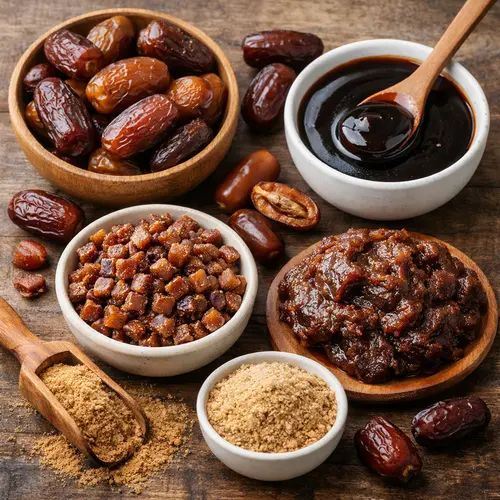
Why dates are a staple ingredient
Dates deliver natural sweetness, binding performance, and rich caramel notes. They’re commonly used to replace or reduce refined sugars while adding body and texture to finished products.
- Natural sweetness: supports clean-label positioning in many applications.
- Binding & texture: helps bars and bites hold shape with a soft chew.
- Flavor profile: warm caramel / honey notes that pair well with cocoa, nuts, oats, and spices.
- Versatility: whole inclusions, chopped pieces, pastes, and syrups for different process needs.
Common varieties (request-based)
Buyers often specify dates by variety for taste, size, and texture. If you’re not sure, describe your end product and we’ll recommend a fit.
| Variety (examples) | Typical characteristics | Often used for |
|---|---|---|
| Deglet Noor | Firm bite, balanced sweetness, good for chopping and visible inclusions. | Granola, cereals, bakery inclusions, diced/chopped formats. |
| Medjool | Large, soft, rich caramel sweetness; premium sensory profile. | Whole snacks, premium inclusions, specialty products. |
| Baking / industrial dates | Optimized for paste/syrup production and value-focused formulations. | Date paste, fillings, sauces, sweetener bases. |
Variety availability can vary by origin, grade, and season. Tell us what you’re making and we’ll confirm workable options.
Common formats
Choose a format based on your process: inclusions, blending behavior, or sweetness delivery.
- Whole: with pit or pitted (snacking, stuffing, or further processing).
- Chopped / diced: size-controlled pieces for bakery and cereal mixes.
- Granules: smaller, more uniform pieces for better dispersion.
- Date paste: smooth base for bars, fillings, sauces, and confections.
- Date syrup: liquid sweetener for beverages, sauces, and bakery.
- Date powder / “date sugar” style: dry sweetening and flavoring where feasible.
Options & documentation
- Organic and conventional options (where available)
- Kosher options (request current documentation)
- COA & spec sheets for QA and receiving
- Lot traceability and production planning support
- Import / export paperwork support when needed
Documentation availability can vary by origin and format—request current details with your quote.
Specs that matter (what buyers often request)
Dates are naturally sticky and moisture-sensitive. These are the parameters that typically impact production performance and finished product consistency.
| Spec area | Why it matters | Common ways to define it |
|---|---|---|
| Moisture & texture | Affects stickiness, flow, shelf stability, and mixing performance. | Target moisture range; “soft” vs “firm” handling expectations. |
| Cut size (for chopped/diced) | Controls distribution in mixes and reduces segregation. | Nominal cube size + sieve range + acceptable fines %. |
| Coating / anti-caking | Improves flow and reduces clumping in hoppers and conveyors. | Coated vs uncoated; allowed carriers; max % coating. |
| Pitting & defect tolerance | Reduces line risk and improves consumer experience. | Pitted spec; pit fragment tolerance; defect grading notes. |
| Paste consistency | Impacts pumping, mixing, and texture in bars and fillings. | Viscosity expectations; screen size; packaging (pail/drum/tote). |
| Syrup concentration | Controls sweetness, water activity, and process stability. | Brix range; filtration; packaging format; intended application. |
If you have internal QA limits (e.g., maximum foreign material, tighter defect tolerances), include them with your request so we can confirm feasibility.
How dates are used in production
Different formats behave differently on the line. Here are common use patterns and what typically matters most.
Bars, bites & snacks
- Date paste as a binder and sweet base
- Chopped/diced dates for chewy inclusions
- Texture stability via moisture alignment
Ask about paste screen size and packaging to match your mixing and depositing equipment.
Bakery & fillings
- Chopped dates in cookies, breads, and muffins
- Date paste for fillings, swirl, or layered products
- Syrup as a sweetener in glazes and sauces
Cut size and coating are frequent levers for better flow and more even bake distribution.
Cereals & mixes
- Size-controlled diced dates for even distribution
- Reduced fines to help prevent dusting and separation
- Packaging that protects pieces from compression
For cereal inclusions, sieve-defined diced formats often outperform “chopped” in consistency.
Packaging & handling (typical)
Dates can compress and clump if handled improperly. Packaging choice influences receiving efficiency and quality outcomes.
- Bulk bags / cartons: common for whole, pitted, and diced formats.
- Pails / drums: often used for paste or thicker syrups.
- Totes (request-based): suitable for higher volumes of paste/syrup.
- Liners: help manage moisture migration and sticking.
- Pallet configuration: improves warehouse handling and freight efficiency.
Storage considerations (general)
Storage needs depend on format and your product’s shelf-life targets. Many teams manage quality by controlling temperature and humidity exposure.
- Temperature stability: warmer conditions can increase stickiness and clumping.
- Moisture exposure: humidity can change texture and flow.
- FIFO & lot tracking: helps maintain consistent performance in production.
- Segregation: keep aromatic ingredients separate if you’re concerned about odor transfer.
For formal storage requirements (including temperature ranges), rely on the specific spec sheet and documentation for the lot/format you purchase.
How quoting typically works
The fastest path is to align on format and specs first, then confirm documentation, packaging, and lead time.
- Define your format: whole/pitted, diced, paste, syrup, or powder.
- Confirm spec priorities: cut size, moisture, coating, and pitting expectations.
- Share volume & destination: annual usage + delivery region (USA/Canada).
- Finalize packaging: bulk weight, case pack, pallet notes, receiving constraints.
Spec builder (copy/paste)
Use this template in your quote request to reduce back-and-forth.
Variety / grade (if known):
Format: whole (pitted/with pit) / diced / paste / syrup / powder
Target cut size (if diced):
Coating preference: coated / uncoated / acceptable carriers
Moisture target (if required):
Certifications: organic / kosher / other
Allergen needs (declare/avoid):
Packaging: bag/carton weight, pail/drum/tote (paste/syrup)
Annual volume estimate:
Delivery region: USA / Canada (state/province)
If you don’t know the variety, share your application (bars/bakery/cereal) and the texture you want (soft/firm) and we’ll recommend an option.
Related categories
Browse categories where Dates are commonly sourced:
Organic Dried Fruit Nuts & Seeds Oats Plant Proteins
If some category links above don’t exist on your site yet, remove them or replace them with the correct URLs.
Request a quote for Dates
Share target specs (organic/kosher), format (whole/pitted, diced, paste, syrup, powder), annual volume estimate, and delivery region (USA/Canada). If your QA team has a checklist, attach it and we’ll respond point-by-point.
For diced formats, include target cut size + acceptable fines %. For paste/syrup, tell us your packaging preference (pail/drum/tote) and intended use.
Prefer email? Send your specs to contact@atlastradehouse.com.
FAQ
Do you have minimum order quantities (MOQs)?
MOQs depend on variety, format, and any custom processing (dicing size, coating preference, packaging). Share your target volume and we’ll confirm the best MOQ and pricing breaks.
Can I request organic and conventional pricing?
Yes. Where available, we can quote organic and conventional options so you can compare cost, labeling, and lead times.
Do you supply date paste and date syrup?
Commonly requested formats include paste and syrup. Share your intended use (bars, fillings, beverage sweetener, sauces) and preferred packaging (pail/drum/tote), and we’ll confirm feasible options.
Do you offer custom cut sizes for chopped/diced dates?
Often yes. If you provide a target cut size and acceptable fines percentage, we can propose a practical sieve range and packaging configuration to improve flow and reduce clumping.
What documentation can you provide?
Documentation may include COAs, spec sheets, allergen statements, and lot traceability. Import/export support is available when needed. Availability varies by origin and format—request current details with your quote.
What information helps you quote fastest?
Format (whole/pitted, diced, paste, syrup, powder), variety preference (if any), certification needs (organic/kosher), annual volume estimate, delivery region, and packaging requirements. For diced formats, include cut size and coating preference.
For formal storage requirements and shelf-life guidance, rely on the specific documentation and spec sheet for your requested format/lot.