Home / Products / Flour & Plant Proteins / Tapioca Flour
Wholesale ingredient • Documentation support • Spec alignment • USA & Canada
Tapioca Flour
Wholesale supply for Tapioca Flour (commonly referred to as tapioca starch) with consistent specs, food safety documentation support, and flexible formats for manufacturers, brands, and co-packers across the United States & Canada.
Need a thickener that delivers clean sheen and smooth texture? Tell us your application (sauce, bakery, frozen, confectionery) and process conditions (heat, shear, pH, freeze-thaw) and we’ll propose the best-fit tapioca flour/starch options.
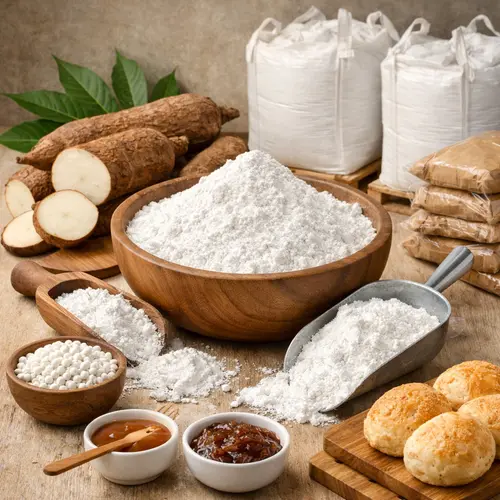
What it is
Tapioca flour is a starch ingredient derived from cassava (also called tapioca). In many procurement and manufacturing settings, tapioca flour and tapioca starch are used interchangeably. It is widely used for thickening, binding, and texture-building in both dry mixes and cooked systems, and it’s a common component in gluten-free formulations.
Why product teams choose tapioca
- Texture & mouthfeel: contributes to smooth, cohesive textures and pleasing chew in some applications
- Thickening: builds viscosity and can add a glossy appearance in sauces and fillings
- Gluten-free formulation: frequently used in gluten-free bakery and bread systems
- Neutral profile: typically chosen when clean flavor is important
If you’re replacing another starch (corn, potato, rice), include your current usage rate and performance target so we can propose equivalents.
How we support manufacturers
- Spec matching for moisture, whiteness/color, viscosity targets, and particle size
- Documentation support (COA, specs, traceability statements)
- Program planning for recurring production and stable supply
- Flexible packaging aligned to plant receiving and batching
- Custom processing options depending on volume and configuration
Fast quote checklist
Include these details for the fastest match:
- Application (bakery, sauce, frozen, confectionery, snack)
- Grade needed (native tapioca flour/starch vs. functional grades)
- Key performance needs (viscosity, freeze-thaw, clarity, chew)
- Certifications (organic, kosher, etc.)
- Packaging preference and annual volume estimate
- Ship-to region (USA/Canada) and timeline
Grades & options
Availability depends on origin, processing method, and market conditions. We’ll confirm current options with your quote request.
Native tapioca flour / tapioca starch
- General-purpose thickening and texture ingredient
- Used in dry mixes, bakery blends, soups, sauces, and fillings
- Common for gluten-free baking systems when paired with other flours/starches
Functional tapioca-based starch systems
- Used when performance requirements are more specific (e.g., freeze-thaw tolerance, process stability)
- Often evaluated for frozen sauces, refrigerated dips, and texture-critical products
- Selection depends on your process: heat, shear, pH, and storage conditions
Custom blends (volume-dependent)
- Blends with other starches or flours for targeted texture and functionality
- Common in gluten-free bakery mixes and batter/breading systems
- Share your target finished texture and processing method to review feasibility
If you need a specific viscosity target or behavior in cooking/cooling, include your process parameters so we can propose the right grade.
Packaging & wholesale formats
Packaging options depend on grade and program volume. We’ll align to common manufacturing receiving requirements.
Common pack configurations
- Multiwall bags for dry ingredient receiving and batching
- Case packs for smaller-scale production or co-packing workflows
- Bulk formats for high-volume programs (where available)
- Private label options may be available depending on configuration and volumes
Operational considerations
- Dust control: fine powders may require dust management in high-speed dosing
- Moisture control: reseal promptly and store in a dry environment
- Sifting: some applications benefit from screening to improve flow and prevent lumping
Private label support
If you need retail-ready tapioca flour packaging, share target pack sizes, label requirements, and forecast volumes for feasibility.
Typical specifications buyers reference
Tapioca flour/starch specs vary by grade and origin. If you have an existing spec sheet, send it—we can often match or propose a close equivalent.
Common specification areas
- Moisture targets for storage and flow
- Viscosity behavior (application-dependent)
- Whiteness / color expectations for finished product appearance
- Particle size distribution for flow and dispersion
- Micro parameters aligned to your risk profile and end use
- Foreign material controls aligned to plant requirements
If your product is sensitive to gel strength, clarity, or cold temperature stability, include those requirements so we can propose an appropriate grade.
Documentation support (QA / Procurement)
Documentation availability can vary by origin and lot. We can support common requests used in onboarding, audits, and customer approvals.
- COA (lot-specific)
- Specification sheets and handling guidance
- Traceability support aligned to lot/batch identifiers
- Allergen statements and cross-contact declarations (as applicable)
- Origin statements when required
If you have a specific documentation template or portal upload requirement, include it in your quote request so we can align.
Common food applications
Tapioca flour/starch is used across categories where manufacturers need thickening, binding, and texture-building. Below are typical use cases and what product teams optimize for.
Gluten-free baking
- Gluten-free breads, rolls, pizza crusts, cookies, cakes, muffins
- Often used to improve chew, crumb texture, and binding in gluten-free blends
- Teams may optimize for particle size and blend compatibility with rice/corn/potato starches
Share your flour blend and hydration level so we can align to a grade that performs well in your dough/batter system.
Sauces, soups & gravies
- Thickening for hot processes; contributes to smooth viscosity and sheen
- Used in shelf-stable, refrigerated, and frozen sauces depending on grade
- Teams often optimize for clarity, heat stability, and cooling behavior
If your sauce is frozen or refrigerated, tell us your storage conditions and freeze-thaw needs.
Snacks, batters & coatings
- Coatings and breading systems; contributes to crispness and binding
- Used in snack seasonings and dry blends for process support
- Teams often optimize for flow, dusting performance, and finished texture
If you’re using tapioca in a batter/breading line, share pickup targets and fry/bake conditions for best-fit selection.
Confectionery & fillings
- Used in fruit fillings, gel systems, and certain chewy textures
- May support clean bite and cohesive gels depending on formulation
- Teams often optimize for clarity, gel strength, and setting behavior
Tell us if your product is high-acid or high-sugar—processing conditions can impact starch performance.
Formulation notes (practical)
Performance varies by grade and process conditions. These are common considerations for development teams working with tapioca.
- Dispersion: pre-blending into dry mixes can reduce lumping in wet systems
- Heat & shear: viscosity behavior changes with cooking profile and agitation intensity
- Acid & pH: acidic systems can impact starch performance; grade selection matters
- Freeze-thaw: frozen products may benefit from functional starch systems
- Texture tuning: tapioca is frequently blended with other starches for target mouthfeel and stability
If you’re troubleshooting syneresis, gel breakdown, or opacity, share your formula context and storage conditions for targeted recommendations.
Handling & storage guidance
Always follow handling guidance on your lot documentation. In general, tapioca flour/starch performs best when protected from humidity and contamination.
- Store sealed in a cool, dry area; protect from humidity
- Odor control: store away from strong-smelling materials (powders can absorb odors)
- FIFO rotation to maintain consistent performance
- Sanitation: use clean, dedicated scoops/transfer equipment for allergen control
If you need a specific shelf-life window for retail or export programs, include that requirement in your request.
Common formats (summary)
- Powder (tapioca flour / tapioca starch)
- Functional grades for specialized texture and stability needs (availability dependent)
- Custom blends with other starches/flours (volume-dependent)
Need a specific mesh size, viscosity behavior, or moisture spec? Share your target and we’ll match an option.
Options & documentation
- Ask for organic, kosher, and custom processing options
- Traceability and lot documentation support for production planning
- Support for import/export paperwork when needed
Documentation availability can vary by origin and format—request current details with your quote.
Related categories
Browse categories where this ingredient is commonly sourced:
FAQ
Common questions from procurement, QA, and R&D teams.
Is tapioca flour the same as cassava flour?
They’re related but not always the same. Tapioca flour typically refers to starch extracted from cassava, while cassava flour can refer to a whole-root flour that includes more of the cassava components beyond starch. Names vary by market—share your spec sheet so we can match the correct ingredient.
Which grade is best for frozen sauces?
Frozen and freeze-thaw applications often require more specific performance targets. Depending on your process, a functional tapioca-based starch system may be preferred. Share your freeze-thaw cycle expectations and storage conditions for the best match.
What documentation can you provide?
We can support common documentation requests such as COA, specification sheets, and traceability materials. Allergen statements and cross-contact declarations are available where provided by the facility and lot documentation.
Can I request organic and conventional pricing?
Yes. Where available, we can quote organic and conventional options so you can compare cost, lead time, and labeling needs.
Do you offer custom blends?
Yes—custom blends and processing may be available depending on volume and configuration. If you’re building a gluten-free blend, share your target texture, finished product type, and processing method.
What are typical MOQs?
MOQs depend on grade, packaging, and origin. Share your estimated monthly/annual volume and we’ll confirm MOQ options.
Need help selecting a tapioca grade?
Send your application, process details (heat/shear/pH), and storage conditions (ambient/refrigerated/frozen) and we’ll propose suitable options.
Request PricingRequest a quote for Tapioca Flour
Share target specs (organic/kosher needs), grade (native vs. functional), annual volume estimate, and delivery region (USA/Canada). If you’re replacing another starch, include your current formula target and performance goals so we can match functionality.
Recommended info to include
- Use case: baking, sauce, soup, coating, confectionery, frozen
- Grade: native tapioca flour/starch vs. functional needs
- Process: cook temperature, shear/agitation, pH (if applicable)
- Storage: ambient vs. refrigerated vs. frozen (freeze-thaw cycles)
- Packaging: bags, case packs, private label (if needed)
- Volume & timeline: pilot vs. ongoing program
How sourcing programs typically work
- Spec-driven: viscosity and appearance requirements guide grade selection
- Process-driven: heat/shear/pH and storage determine stability needs
- Volume-driven: recurring programs may unlock additional packaging or blending options
We’ll respond with feasible options and tradeoffs (availability, lead time, packaging, documentation) so you can move forward confidently.
Explore more
If you’re building a flour/starch procurement list, these pages may help:
All Products Applications Ingredient Guides Quality Sustainability