Home / Products / Flour & Plant Proteins / Sunflower Protein
Wholesale ingredient • Documentation support • Flexible formats • USA & Canada
Sunflower Protein
Wholesale supply for Sunflower Protein with consistent specs, food safety documentation support, and flexible formats for manufacturers, brands, and co-packers across the United States & Canada.
Looking for a protein alternative to soy or pea? Share your application and processing method (baked, extruded, beverage, fermented, emulsified) and we’ll propose sunflower protein options that align to taste, texture, and nutrition targets.
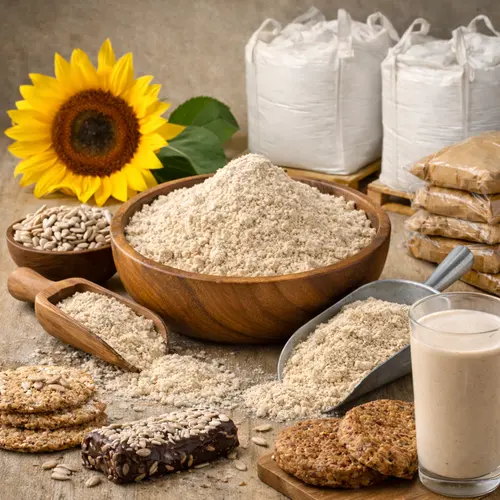
What it is
Sunflower protein is a plant-based ingredient derived from sunflower seeds. Depending on processing, it can be supplied as sunflower seed flour/meal, protein-rich concentrates, or higher-protein grades used in nutrition-forward formulations. It’s commonly evaluated for neutral positioning, formulation flexibility, and as an alternative to certain major allergen proteins.
Why product teams choose sunflower protein
- Plant-based nutrition for snacks, bakery, mixes, and prepared foods
- Functional support for structure, water binding, and texture in certain systems
- Allergen strategy as a potential alternative to soy/dairy proteins (confirm with allergen documentation)
- Label positioning for sunflower-based ingredient decks
If you have a target protein percentage, particle size, color, or flavor requirement, include it in your quote request so we can match a grade.
How we support manufacturers
- Spec alignment to your target protein, sieve range, and moisture parameters
- Documentation support (COA, specs, traceability statements)
- Flexible packaging for pilot, scale-up, and recurring programs
- Program planning for ongoing production (forecasting & lot planning)
- Custom processing options depending on volume and facility capabilities
Fast quote checklist
Include these details for the fastest match:
- Format (protein flour/meal, concentrate, higher-protein grade)
- Target protein range (e.g., “minimum %”)
- Particle size / sieve preference
- Color or flavor sensitivity (if critical)
- Packaging preference and expected volume
- Ship-to region (USA/Canada) and timeline
Formats we can source
Availability depends on origin, processing method, and market conditions. We’ll confirm current options with your quote request.
Sunflower protein flour / meal
- Often used in bakery, mixes, and dry blends
- Can contribute to texture, structure, and nutrition positioning
- Particle size options may vary (fine, standard, custom sieve ranges where available)
Sunflower protein concentrate
- Higher protein density for nutrition-driven formulations
- Commonly evaluated for snacks, bars, and plant-based prepared foods
- May be selected to reduce floury mouthfeel compared to lower-protein meals (application dependent)
Higher-protein grades
- Used when protein targets are strict (e.g., “high protein” claims)
- Often paired with other proteins or hydrocolloid systems for optimized texture
- Ask for application-fit recommendations (extrusion vs. baked vs. beverage)
For sensitive applications, share your process conditions (heat, shear, pH, hydration time) so we can propose a grade that performs well.
Wholesale packaging
Packaging options depend on the grade and program volume. We’ll align to common manufacturing receiving requirements.
Common pack configurations
- Multiwall bags for dry ingredient receiving (typical for powders and meals)
- Bulk formats for higher-volume programs (where available)
- Retail-ready / private label options may be available depending on configuration and volume
Operational considerations
- Moisture control: keep sealed and store in a dry environment
- FIFO rotation: align inventory to shelf-life and production planning
- Sifting: some applications benefit from sifting or inline screening
Private label support
If you need private label packaging, share target pack sizes, label requirements, and forecast volumes for feasibility.
Typical specifications buyers reference
Sunflower protein specs vary by grade and processing. If you have an existing spec sheet, send it—we can often match or propose a close equivalent.
Common specification areas
- Protein content (minimum % target)
- Moisture and water activity targets for stability
- Particle size (sieve range / mesh)
- Color expectations for finished product appearance
- Flavor profile tolerances (critical for beverages and mild bakery items)
- Micro parameters based on your risk profile and application
If your product is sensitive to color or flavor, include that detail up front so we can propose the most suitable grade.
Documentation support (QA / Procurement)
Documentation availability can vary by facility, origin, and lot. We can support common requests used in onboarding and audits.
- COA (lot-specific)
- Specification sheets and handling guidance
- Traceability support aligned to lot/batch identifiers
- Allergen statements and cross-contact declarations (as applicable)
- Origin statements when required
If your customer requires a specific documentation template, portal upload, or additional declarations, include those requirements in your request.
Common food applications
Sunflower protein can be used across categories where manufacturers want added protein, texture support, or a sunflower-forward ingredient deck. Below are common use cases and what product teams typically optimize for.
Bakery, mixes & flour blends
- Bread, muffins, cookies, pancakes, waffles, baking mixes
- Often used to increase protein content and improve structure in some systems
- Product teams may optimize for color impact and flavor neutrality
Tell us your target inclusion rate range and whether you need a fine particle size for smoother doughs/batters.
Snacks & extruded products
- Puffs, crisps, crackers, extruded snacks, coated nuts/seeds blends
- Often evaluated for protein uplift and texture contribution
- Extrusion performance depends on formulation, moisture, and processing conditions
If you extrude, share barrel temperature zones and moisture targets so we can suggest grades that are commonly used in similar systems.
Bars, bites & nutrition products
- Protein bars, granola clusters, snack bites, functional mixes
- Typically optimized for mouthfeel, binding, and sweetness/flavor masking strategy
- Often paired with fibers, syrups, nut butters, or other proteins
If you’re managing off-notes, tell us your flavor profile constraints and we can propose alternatives and blending approaches.
Plant-based prepared foods
- Meat alternatives, patties, crumbles, sauces, meal kits
- May support water binding, texture, and nutrition positioning in certain systems
- Often used alongside starches, gums, and other proteins for target bite/juiciness
Share your cooking method (baked, pan-fried, retort, frozen) so we can align to your process and finished texture goal.
Formulation notes (practical)
Performance can vary significantly by grade and system. The notes below are common considerations for development teams.
- Hydration: some systems benefit from pre-hydration to reduce grittiness and improve uniformity
- Flavor: choose a grade aligned to your flavor sensitivity; masking strategy may be needed in beverages
- Color: consider finished product appearance—some grades can influence color more than others
- Texture: blends (with other proteins, fibers, or starches) often improve mouthfeel and structure
- Processing: heat and shear can change functionality—share your process for best-fit selection
If you’re replacing soy/pea protein, include your current formula targets (protein per serving, texture, and claims) to speed up matching.
Handling & storage guidance
Always follow handling guidance on your lot documentation. In general, dry protein ingredients perform best when protected from humidity and strong odors.
- Store sealed in a cool, dry area; avoid high humidity exposure
- Odor control: keep away from strong-smelling materials in shared warehouses
- Screening: consider inline screening/sifting for high-speed dosing systems
- FIFO rotation to maintain freshness and consistent performance
If you need a specific shelf-life window for retail or export programs, include that in your request.
Common formats (summary)
- Powder / flour (fine to standard particle size options)
- Protein concentrate grades
- Custom sieve ranges (where available)
- Blends with other plant proteins or functional ingredients (volume-dependent)
Need a specific sieve range, moisture target, or protein minimum? Share your spec and we’ll match an option.
Options & documentation
- Ask for organic, kosher, and custom processing options
- Traceability and lot documentation support for production planning
- Support for import/export paperwork when needed
Documentation availability can vary by origin and format—request current details with your quote.
Related categories
Browse categories where this ingredient is commonly sourced:
FAQ
Common questions from procurement, QA, and R&D teams.
What’s the difference between sunflower meal, flour, and protein concentrate?
“Meal” or “flour” is typically a milled sunflower seed ingredient that can vary in protein content and color depending on processing. “Protein concentrate” generally refers to a higher-protein grade produced through additional processing. The right choice depends on your protein target, texture requirements, and flavor/color sensitivity.
Does sunflower protein work in beverages?
Beverage use depends heavily on grade and formulation strategy. Many beverage systems require careful selection for dispersibility, mouthfeel, and flavor management. Share your pH, sweetness system, and target texture and we’ll propose suitable options where available.
What documentation can you provide?
We can support common documentation requests such as COA, specification sheets, and traceability materials. Allergen statements and cross-contact declarations are available where provided by the facility and lot documentation.
Can I request organic and conventional pricing?
Yes. Where available, we can quote organic and conventional options so you can compare cost, lead time, and labeling needs.
Do you offer custom blends?
Yes—custom blends and processing can be available depending on volume and configuration. If you’re building a blend, share your target protein per serving, taste constraints, and processing method.
What are typical MOQs?
MOQs depend on grade, packaging, and origin. Share your target format and estimated monthly/annual volume and we’ll confirm MOQ options.
Need help selecting a grade?
Send your application, protein target, and processing method. We’ll propose options aligned to your performance and labeling goals.
Request PricingRequest a quote for Sunflower Protein
Share target specs (organic/kosher needs), format (flour/concentrate), target protein range, annual volume estimate, and delivery region (USA/Canada). If you’re replacing another protein, include your current target spec and application so we can propose equivalents.
Recommended info to include
- Application: bakery, snacks, bars, beverage, prepared foods
- Protein target: minimum % and protein per serving goal
- Particle size: preferred sieve range / fineness
- Claims: organic, kosher, allergen strategy (confirm documentation)
- Process: baked, extruded, beverage mixing, retort/frozen
- Volume & timeline: pilot vs. ongoing program
How sourcing programs typically work
- Spec-driven: protein % and particle size drive grade selection
- Use-case driven: bakery vs. beverage vs. extrusion often require different performance profiles
- Volume-driven: recurring programs may unlock additional packaging or blending options
We’ll respond with feasible options and tradeoffs (availability, lead time, packaging, documentation) so you can move forward confidently.
Explore more
If you’re building a plant protein procurement list, these pages may help:
All Products Applications Ingredient Guides Quality Sustainability