Wholesale ingredient • Documentation support • Manufacturing-ready formats
Soy Oil
Wholesale supply for Soy Oil designed for production teams—consistent specs, food safety documentation support, and flexible packaging formats for USA & Canada buyers.
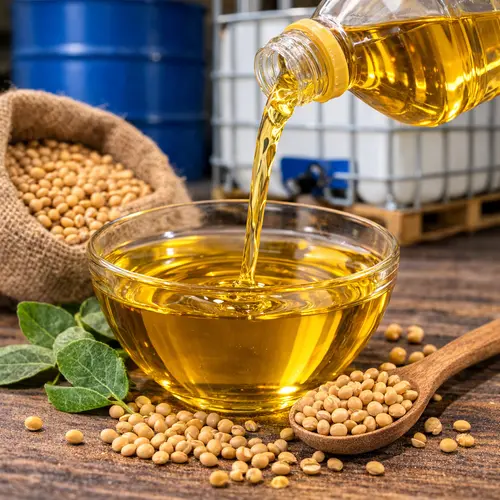
Ingredient overview
Soy oil (soybean oil) is a widely used edible oil in food manufacturing due to its neutral flavor profile, broad functionality, and versatility across frying, baking, sauces, dressings, and processed foods. Different refining and processing steps can be selected to align with stability targets, cold-flow requirements, and finished product needs.
- Common names: soybean oil, soy oil
- Typical profile: light color, neutral aroma/taste (in refined grades)
- Manufacturing uses: frying oil, baking fats, emulsions (mayo/dressings), snack seasoning carriers
- Why buyers choose it: functional performance, consistent supply programs, cost-effective formulation option
Not sure which grade you need? Share your application (frying vs. dressing vs. bakery) and we’ll help narrow the best-fit program.
Grades & formats
Soy oil programs are usually defined by processing level and intended use (e.g., frying, emulsions, bakery). Below are common descriptors buyers use.
Refined grades (common)
- RBD: refined/bleached/deodorized; neutral taste and color
- Foodservice/frying programs: selected for stability and consistency
- Ingredient use: bakery formulas, sauces, dressings, snack manufacturing
Refining improves neutrality and reduces unwanted flavors/odors.
Degummed & specialty
- Degummed: phospholipids reduced for certain downstream uses
- Winterized (application-dependent): improved cold clarity/flow for chilled applications
- High-stability programs: often requested for extended frying performance
Availability depends on program and volume. Share your process conditions.
Label-driven programs
- Non-GMO: used for certain retail claims (documentation required)
- Organic: for organic-certified finished products (where available)
- Kosher: documentation options may be available
Tell us your labeling/certification requirement so we can filter options correctly.
Common formats (quick list)
If you have a required spec sheet or internal targets, include them with your quote request so we can match the right program.
Typical specifications (guidance)
Specifications vary by grade and program. Use this as a planning guide and request the current spec sheet for your selected option.
| Parameter | Why it matters |
|---|---|
| Processing level (grade) | Defines neutrality, stability, and application suitability (e.g., RBD vs degummed vs specialty programs). |
| Free fatty acids (FFA) | Common quality indicator; impacts flavor and stability. Buyers often specify an upper limit for consistency. |
| Moisture & impurities (MIU) | Impacts clarity, shelf stability, and downstream processing performance. |
| Color | Important for light-colored products (dressings, sauces, mayonnaise) and consistent finished product appearance. |
| Peroxide / oxidation indicators | Used to assess freshness and oxidative stability; relevant for extended shelf-life products and frying programs. |
| Cold-flow / clarity (if applicable) | Winterized or specialty programs may target clarity at lower temperatures for refrigerated distribution. |
| Allergen statement | Soy is a major allergen; refined oils can have specific labeling considerations depending on regulations and customer requirements. |
| Certifications (optional) | Organic / non-GMO / kosher documentation availability varies by program and lot. |
Applications
Soy oil is used in many categories because it functions as a heat transfer medium, fat source, texture modifier, and flavor carrier. Below are common manufacturing applications and what buyers typically optimize for.
Frying & foodservice
- Fryers for snacks, breaded items, and prepared foods
- Programs selected for stability and performance consistency
- Often paired with filtration and turnover practices
Tell us your fryer temps and turnover rate if you need a performance-focused program.
Bakery & processed foods
- Softness and moisture management in baked goods
- Texture and mouthfeel in cakes, muffins, tortillas, and fillings
- Fat carrier for flavors and spices in savory systems
Packaging format (pails/drums/totes) often depends on batch size and line feeding.
Sauces, dressings & emulsions
- Mayonnaise-style emulsions and creamy dressings
- Vinaigrettes and sauce systems where clarity matters
- Consistency targets for stable emulsification
If you distribute refrigerated, ask about cold clarity requirements.
Selecting the right program (fast guide)
Quality & documentation support
Common documentation
- COA: lot-linked results used for receiving release
- Specification sheet: grade definition and key quality fields
- Allergen statement: supports label review and allergen programs
- Traceability: lot codes and supporting records (as available)
Documentation availability depends on source and program.
What production teams ask for
- Consistent viscosity/handling characteristics in pumping
- Repeatable flavor neutrality and color targets
- Predictable performance in frying or emulsions
- Packaging aligned to bulk transfer needs
If you have line constraints, include them so we can match packaging options.
Handling & storage (general)
- Store sealed, away from heat and direct light.
- Use clean transfer equipment to reduce contamination risk.
- Rotate inventory using FIFO and track lot codes.
- Follow supplier guidance for shelf life and storage conditions.
Always follow lot-specific documentation for the program supplied.
Packaging & logistics
Oil packaging is typically selected based on throughput, handling equipment, and storage footprint. If you have receiving constraints, include them in the quote.
Packaging options
- Pails: convenient for smaller batch operations
- Drums: common for mid-volume manufacturing
- Totes: suited to higher-volume programs and bulk transfer
- Case packs: depending on program and configuration
Availability varies by program and destination.
Warehouse & line fit
- Pumping vs. pouring workflows
- Pallet footprint and stack height constraints
- Label requirements (lot/date fields, internal receiving codes)
If you need specific pallet patterns, tell us early.
Shipping considerations
- Transit time coordination for production windows
- Lot consolidation when appropriate
- Documentation packet coordination for receiving
Share your delivery region and target receiving date to align lead time.
How to request a quote (fast)
The most accurate pricing comes from specifying your grade/program needs, packaging format, and volumes. Use the checklist below.
-
Choose grade/program
RBD, degummed, winterized (if needed), or label-driven (organic/non-GMO). -
Select packaging
Pails/drums/totes based on throughput and handling equipment. -
Confirm volumes & destination
Order size + annual forecast and USA/Canada delivery region.
Quote checklist
- Grade/program: RBD / degummed / winterized / other
- Certifications: non-GMO / organic / kosher (if required)
- Packaging: pails / drums / totes (preferred)
- Volume: per order + annual forecast
- Destination: USA/Canada region + receiving constraints
- Timeline: target first delivery date
- Application: frying / bakery / dressing / other
If you have internal acceptance limits (FFA, MIU, color), include them for faster matching.
Example message (copy/paste)
Use this template in your quote form or email:
Ingredient: Soy Oil (Soybean Oil)
Grade/program: RBD (or degummed / winterized / other)
Certifications: Non-GMO: Yes/No • Organic: Yes/No • Kosher: Yes/No
Packaging: pails / drums / totes (preferred)
Volume: ___ per order • annual forecast ___
Delivery: USA/Canada • region: ____ • needed by: ____
Application: frying / bakery / dressing / other
QA targets: (optional) FFA max ___ • MIU max ___ • color target ___
Tip: If you don’t know the grade, just list the application and current packaging.
Request a quote for Soy Oil
Share grade/program needs, packaging, annual volume estimate, and delivery region (USA/Canada). Include certification needs (organic/non-GMO/kosher) if required for labeling.
Request Pricing Request DocumentationIf the form is long, prioritize: Grade, Packaging, Volume, Destination.
FAQ
Answers below are general guidance. For program-specific details, request current documentation with your quote.
Is soy oil the same as soybean oil?
Yes—“soy oil” and “soybean oil” are commonly used interchangeably in ingredient purchasing.
How do I choose between pails, drums, and totes?
Choose based on throughput and handling equipment. Pails fit smaller batch operations; drums are common for mid-volume plants; totes are often used for high-volume programs with pumping/transfer equipment.
Can you support private label or branded oil programs?
Private label support may be available depending on program, packaging, and volume. Share your label and packaging goals so we can confirm feasibility.
Do you support USA and Canada deliveries?
Yes. We support supply for USA and Canada buyers and can help align documentation and receiving needs for your QA process.
What should I include if my facility has allergen controls?
Mention soy allergen requirements (segregation, labeling, documentation). If you have a specific allergen statement format your QA team requires, include it in your request so we can align on the right program and paperwork.