Home / Products / Spices, Extracts & Flavors / Salt (Sea Salt, Pink Salt)
Wholesale ingredient • Fine to flake formats • Documentation support
Salt (Sea Salt, Pink Salt)
Wholesale supply for Salt (Sea Salt, Pink Salt) with consistent specifications, documentation support, and flexible formats for manufacturers, brands, and co-packers across the USA & Canada.
Need a free-flowing fine salt for seasoning blends or a premium flake for finishing? Share your application and target grind and we’ll match the right program to quote.
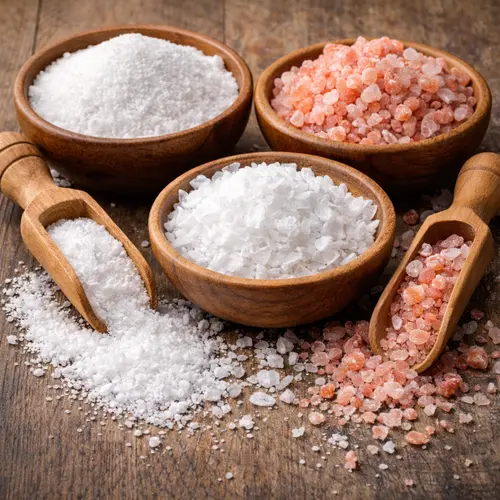
Salt types
Type choice is often driven by labeling, appearance, and texture goals.
- Sea salt: versatile, available in multiple grinds & flakes
- Pink salt: visual appeal for finishing and blends
- Standard food-grade: consistent dissolution and control
Common formats
Format selection impacts dissolution rate, coverage, and line dosing.
- Fine: fast dissolution, uniform seasoning
- Coarse/kosher: tactile texture, controlled dissolution
- Flake: finishing salt and premium texture
- Custom sieve: application-driven sizing
Best for
Salt is used for taste, preservation, texture, and processing performance.
- Seasoning blends and rubs
- Snack coatings and chips
- Bakery and dough systems
- Brines, pickling, and cured products
- Finishing applications (flake/pink)
Salt buying guide (what to specify)
For accurate quotes and consistent performance, salt is typically specified by type (sea/pink/standard), iodized vs. non-iodized, and particle size distribution (fine/coarse/flake). For dry blends, anti-caking and flowability requirements can be critical.
Key RFQ inputs
- Type: sea salt, pink salt, standard food-grade salt
- Format: fine, medium, coarse, kosher grain, flakes
- Particle sizing: sieve range or target distribution
- Iodized: iodized vs. non-iodized requirement
- Flowability: anti-caking required or “no anti-caking” preference
- Application: seasoning blend, brine, snack coating, bakery, finishing
- Labeling: kosher (and other program requirements as applicable)
- Packaging: bag size, case pack, pallet configuration
If you are matching a current product, share your existing spec (mesh size, iodized, anti-caking) and we’ll quote the closest equivalent option available.
Quality, performance & handling considerations
Salt performance depends heavily on particle size and humidity exposure. Fine salts can clump in humid environments and may benefit from anti-caking programs, while coarse and flake salts are often selected for texture and finishing behavior.
What COAs may include
- Identity/assay (program-based)
- Moisture target
- Particle size distribution (if specified)
- Lot/batch identifiers
Blending & flow
- Anti-caking needs (dry blends)
- Static/dusting considerations
- Uniform dosing on seasoning lines
- Sieve match to other spices
Storage guidance
- Store sealed in a dry environment
- Protect from humidity to prevent clumping
- Reseal promptly between uses
- Use FIFO inventory practices
Application notes
- Fine salt dissolves faster and seasons evenly
- Coarse/kosher supports tactile seasoning
- Flakes provide finishing texture
- Brines favor consistent dissolution
If your production environment is humid or your blend includes hygroscopic ingredients, mention it—flowability and anti-caking choices can improve line performance.
Applications & recommended formats
Salt selection often comes down to dissolution speed, coverage on food surfaces, and texture. Below are common applications and typical starting choices.
Seasoning blends
- Best fit: fine or custom sieve
- Uniform mixing with spices
- Optional anti-caking for flow
- Consistency on high-speed dosing lines
Snack coatings
- Best fit: fine to medium
- Improved surface coverage
- Better adhesion with oil systems
- Custom sizing to reduce “salt bite”
Brines & pickling
- Best fit: fine/medium non-iodized (often)
- Fast dissolution in aqueous systems
- Consistency for batch control
- Specify iodized preference based on label
Bakery & dough systems
- Best fit: fine
- Uniform dispersion in mixing
- Stable batch-to-batch performance
- Coordinate with yeast and fermentation controls
Finishing salt
- Best fit: flake sea salt or pink salt
- Premium appearance and crunch
- Controlled dissolution on the palate
- Popular for chocolate, bakery, and savory finish
Custom blends
- Best fit: matched sieve sizes
- Uniform mixing reduces segregation
- Salt-to-spice ratio control
- Label and documentation alignment
If you’re building a seasoning blend, matching salt particle size to your spices can reduce segregation in packaging and improve flavor consistency per serving.
Packaging & logistics
Packaging selection depends on throughput and handling. Salt is hygroscopic—moisture protection helps maintain free-flow and prevents caking, especially for fine salt.
Common wholesale packaging
- Multiwall bags: common for manufacturing and blending
- Case-packed: controlled staging for production
- Palletized shipments: consistent receiving and planning
What to include for freight quoting
- Ship-to city/state/province (USA/Canada)
- Dock/forklift availability and receiving hours
- LTL vs. FTL preference (or “best option”)
- Requested lead time and release schedule
Options & documentation
Documentation availability can vary by program—request current details with your quote.
- COA, spec sheet, and lot traceability support
- Kosher documentation (if required)
- Iodized vs. non-iodized options (program-based)
- Custom sieve sizing and blend support (volume-dependent)
Common RFQ add-ons
- Anti-caking requirement (or “no anti-caking”)
- Fine vs. coarse vs. flake preference
- Pink salt color/appearance expectations
- Matched particle size for seasoning blends
How to request a quote (fastest turnaround)
Share a few details and we’ll respond with options aligned to your application, spec needs, and delivery lane.
1) Type & label needs
- Sea salt vs. pink salt vs. standard
- Iodized vs. non-iodized
- Kosher documentation needs
- Anti-caking preference
2) Grind & application
- Fine/medium/coarse/kosher/flake
- Sieve range (if needed)
- Seasoning, brine, bakery, snack, finishing
- Any existing spec/COA to match
3) Volume & delivery
- Trial quantity and ramp plan
- Monthly/annual estimate
- Ship-to region (USA/Canada)
- Preferred packaging and release schedule
FAQ
Answers to common wholesale purchasing questions for salt programs.
Do you have minimum order quantities (MOQs)?
MOQs depend on salt type, grind size, packaging, and documentation needs (e.g., kosher). Send your target volume and we’ll reply with options.
Can you match a specific grind size?
Yes—share your target mesh/sieve range or an existing specification sheet and we’ll quote the closest available option and confirm feasibility.
When should I choose flake salt?
Flake salts are often used as finishing salts for texture and visual appeal. They dissolve more slowly and provide a crisp bite compared to fine salts used for uniform seasoning.
Do you offer iodized salt?
Iodized options may be available depending on program. Include iodized/non-iodized preference in your RFQ to ensure label alignment.
How should salt be stored?
Store sealed in a dry environment away from humidity to prevent caking. Reseal promptly between uses and use FIFO inventory practices for consistent performance.
Related categories
Browse categories where this ingredient is commonly sourced:
Request a quote for Salt (Sea Salt, Pink Salt)
Share salt type (sea/pink), grind (fine/coarse/flake), iodized preference, any kosher requirements, annual volume estimate, and delivery region (USA/Canada).
Request Pricing