Home / Products / Spices, Extracts & Flavors / Pepper
Wholesale ingredient • Documentation support • Custom processing
Pepper
Wholesale supply for Pepper with consistent specifications, food safety documentation, and flexible formats for USA & Canada buyers. We support manufacturers, brands, and co-packers with pepper ingredients designed for seasonings, sauces, prepared foods, snack coatings, and dry blends.
At a glance
Common applications
- Seasoning blends (retail and foodservice)
- Snack coatings and savory dusts
- Soups, sauces, and prepared meals
- Meat rubs and marinades (formulation dependent)
- Bakery and savory mixes (application dependent)
Typical buyer priorities
- Consistent heat/aroma profile
- Particle size and flow properties
- Micro targets and validated treatment options
- Foreign material controls
- Packaging that protects aroma and reduces caking
If your QA team has specific micro targets or validated treatment requirements, include them in your quote request.
Formats we commonly supply
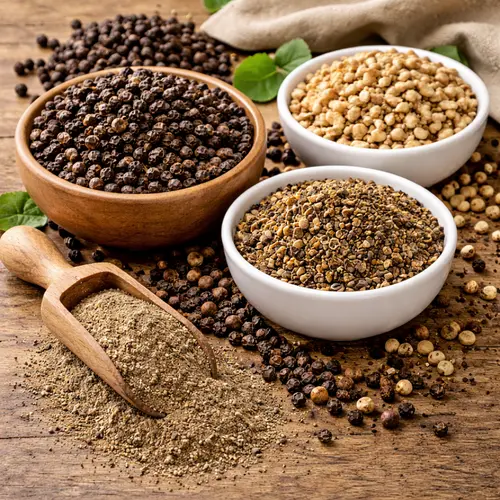
Pepper is typically specified by type (black/white), form (whole/cracked/ground), and particle size (mesh). If you share your target application, we can propose a format that balances cost, aroma, and processing performance.
Black pepper formats
- Whole black peppercorns for grinding, pickling, and premium blends
- Cracked black pepper (multiple mesh ranges for visual and texture)
- Ground black pepper (mesh targets for blends and processed foods)
- Coarse grind for rubs and coatings
Black pepper is the most common option for savory systems, offering balanced heat and aroma.
White pepper formats
- Whole white pepper (program dependent)
- Ground white pepper for light-colored sauces, soups, and dressings
- Fine mesh options for smooth mouthfeel in emulsions
- Custom mesh for specialty blends
White pepper is often chosen when black specks are undesirable or when a different aroma profile is preferred.
Particle size, mesh & performance
- Whole: best aroma retention; requires end-user grinding
- Coarse/cracked: visible in blends; strong bite and texture
- Medium: balanced dispersion in seasonings and sauces
- Fine: uniform distribution; may be more prone to caking without proper handling
Share your preferred mesh or a competitor spec and we’ll match an available grade.
Common blend companions
- Garlic, onion, paprika, chili, cumin, oregano
- Salt and sugar systems (seasoning bases)
- Herb blends (parsley, thyme, rosemary)
- Functional components (anti-caking agents where used)
Ask about custom blending and co-packing support depending on ingredient set and volume.
Food safety, microbial targets & treated options
Many manufacturers purchase pepper with defined microbial specifications and, when needed, validated treatment options. If you provide your micro targets and finished product use-case, we can help align to an appropriate sourcing path.
Common QA considerations
- Lot-level COA review aligned to your micro program
- Foreign material controls and inspection expectations
- Moisture targets to reduce caking and improve flow
- Traceability and supplier documentation for audits
If you have a supplier onboarding checklist, send it and we’ll map requirements to available documentation.
Treated / validated options (availability dependent)
- Validated treatment options may be available for certain formats
- Micro targets can vary by application and internal standards
- Some treated options are better suited to ground vs. whole forms
- Program details depend on origin and supplier capability
Include your micro requirements and format (whole/cracked/ground) in your RFQ so we can quote the correct program.
Sensory and formulation guidance (practical)
Pepper contributes heat, aroma, and a “lift” that changes with grind size and application. Below are practical selection tips many R&D teams use when choosing a pepper format.
Choosing by application
- Snack coatings: medium-to-fine grinds for adhesion and even coverage
- Dry seasoning blends: fine-to-medium for dispersion; cracked for visual
- Soups and sauces: fine grinds for smooth systems; white pepper when color matters
- Rubs: coarse/cracked for texture and bite
If you’re replacing an existing pepper, provide the target mesh and a sensory reference (mild/standard/strong) for a better match.
Flow and caking management
- Fine powders are more prone to caking in humid environments
- Packaging integrity protects aroma and reduces moisture pickup
- Particle size influences blend segregation and dosing accuracy
- Storage conditions impact aroma retention over time
Share your packaging line type (auger filler, volumetric, manual) and we can recommend an appropriate grind and pack style.
Documentation support for purchasing & audits
We support documentation workflows to reduce delays in supplier approval and receiving. Documentation availability may vary by origin and format—request current details with your quote.
Common documents (by request)
- Certificate of Analysis (COA) by lot
- Specification sheet (physical/chemical/micro targets)
- Country of origin details
- Allergen statement
- Lot traceability and packing details
- Program documents where applicable (organic/kosher)
For regulated customers, provide your documentation checklist so we can confirm availability up front.
Typical spec items you can define
- Type: black pepper / white pepper
- Form: whole peppercorns / cracked / ground
- Mesh/particle size: target range for your line
- Moisture: for flow and caking control
- Foreign material: thresholds and inspection expectations
- Micro targets: aligned to your internal QA program
- Packaging: bag type, case counts, pallet configuration
If you already have a spec sheet, include it with your RFQ so we can match the correct grade and treatment level.
Packaging, storage & logistics (general)
Pepper is aromatic and can absorb moisture and odors. Packaging choice affects aroma retention, flow performance, and receiving efficiency for manufacturing operations.
Common wholesale packaging
- Multi-wall bags (common for ground and cracked formats)
- Cartons/cases for certain premium or protected formats
- Pallet labeling aligned to traceability workflows
- Program packaging for private label (where applicable)
Need specific pallet heights, case counts, slip sheets, or barcodes? Include these in your RFQ.
Storage & handling tips
- Store cool and dry; protect from humidity and heat
- Keep containers sealed to protect aroma and prevent moisture uptake
- Segregate from strong odors (spices can cross-absorb aromas)
- Use FIFO rotation to maintain sensory consistency
If you need a specific shelf-life target or storage statement, request it with your documentation set.
Options: organic, kosher, private label & custom blending
Depending on origin and program availability, we may be able to quote organic and/or kosher pepper formats. We can also support private label coordination and custom blending for seasoning programs based on volume and ingredient set.
Organic & certification programs
- Organic options where available (type/form dependent)
- Kosher options where available
- Documentation alignment to your QA onboarding process
- Repeat purchasing support for planned volume programs
For program quotes, include expected monthly/quarterly usage and your timeline.
Custom blending & processing support
- Custom mesh targets for your application
- Blend support with garlic/onion/paprika/herbs
- Line-friendly formats designed to reduce dust and segregation
- Program-dependent co-packing and private label support
Share your ingredient list and target batch size and we’ll advise on feasible processing options.
Request a quote for Pepper
Share target specs (organic/kosher), format, annual volume estimate, and delivery region (USA/Canada). Adding the details below helps us return accurate pricing and suitable options faster.
Include product requirements
- Type: black pepper / white pepper
- Form: whole / cracked / ground
- Preferred mesh or particle size range
- Micro targets or treated/validated requirement (if applicable)
- Intended application (seasoning, sauce, snack coating, rub)
Include commercial details
- Annual volume (or monthly usage)
- Ship-to state/province and receiving constraints
- Packaging preference (bags/cases; pallet requirements)
- Timeline: spot buy vs. ongoing program
- Company type: manufacturer/brand/co-packer/distributor
Prefer email? Send your requirements to contact@atlastradehouse.com.
Related categories
Browse categories where this ingredient is commonly sourced:
FAQ
Which pepper types can you supply?
Common options include black pepper (peppercorns, cracked, ground) and white pepper (whole or ground), plus specialty pepper formats depending on program availability. Share your target application and we’ll recommend the best fit.
Do you offer steam-sterilized or treated pepper options?
Often, yes. Many manufacturers request treated/validated options for lower microbial targets. Availability depends on origin and format—include your micro requirements in the RFQ.
What grind sizes are available?
We can typically supply whole peppercorns, cracked pepper (multiple mesh ranges), and ground pepper with mesh targets based on your application. Share your preferred mesh or particle size spec.
Do you provide COAs, spec sheets, and lot traceability?
Yes. Typical documentation includes COA by lot, specification sheets, country of origin information, allergen statements, and lot traceability. Additional documents may be available by request depending on supplier and format.
Do you have minimum order quantities (MOQs)?
MOQs depend on pepper type, format, and packaging. Share your target volume and ship-to region (USA/Canada) and we’ll provide options.
Why manufacturers source pepper with Atlas Global Trading Co
Our sourcing approach is built for production realities: consistent specs, responsive communication, and documentation support that helps QA teams approve ingredients quickly.
Built for repeat purchasing
- Spec alignment and substitution guidance when markets shift
- Lot-level documentation support for receiving and traceability
- Planning support for ongoing volume programs
- Clear communication around lead times and packaging
Serving USA & Canada
- Bulk and wholesale formats for manufacturers, brands, and co-packers
- Custom grinds, mesh targets, and processing options (where available)
- Support for import/export paperwork when needed
- Responsive sourcing team for RFQs and documentation