Home / Products / Flour & Plant Proteins / Pea Protein
Wholesale ingredient • Documentation support • Custom processing
Pea Protein
Wholesale supply for pea protein with consistent specifications, food safety documentation, and flexible formats for manufacturers, brands, and co-packers across the USA & Canada. Options may include pea protein isolate and pea protein concentrate in multiple protein ranges, plus instantized and application-specific grades to support beverages, bakery, extruded snacks, and meat analogs.
Why pea protein
Popular for plant-based formulations due to high protein contribution, neutral positioning, and compatibility with many savory and sweet systems.
How it’s specified
Typically defined by protein content, particle size, dispersibility, flavor profile, and application needs (beverage vs extrusion vs bakery).
What we support
Documentation-first sourcing, lot traceability, and grade matching to reduce trial-and-error during scale-up.
Overview
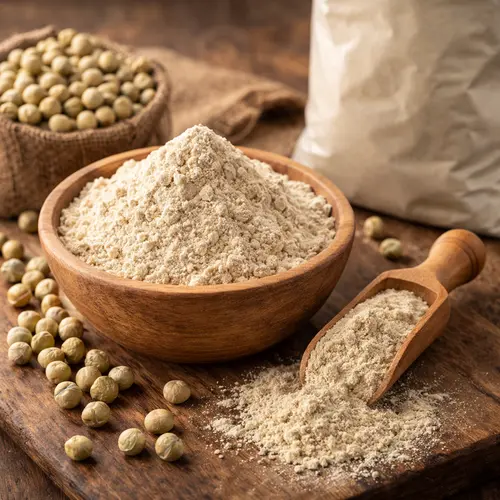
Pea protein is a widely used plant protein ingredient sourced for its high protein content and versatile functionality. Manufacturers use pea protein to increase protein per serving, build texture, and improve nutritional positioning across both savory and sweet products.
- Common formats: isolate, concentrate, instantized grades, and application-specific variants
- Selection levers: protein %, dispersibility, particle size, sensory profile, and process compatibility
- Manufacturing focus: consistent performance in mixing, hydration, extrusion, and thermal processing
- Program support: documentation, traceability, and lot continuity planning for scale-up
Formulation note: Pea protein choice is usually driven by your process (beverage vs extrusion vs bakery) and sensory goals (neutral taste, low beany notes, smooth texture).
Share your application and processing conditions to match the most appropriate grade.
What buyers optimize
Pea protein sourcing is often driven by the following practical requirements:
- Protein target: hit nutrition panel goals without over-thickening or off-notes
- Dispersibility: reduce clumping in beverages and wet systems
- Texture: smooth mouthfeel in drinks; structure in meat analogs and extruded products
- Flavor management: minimize “beany/green” notes; improve overall palatability
- Process fit: stability under heat, shear, and pH (application-dependent)
- QA readiness: documentation packages for audits and approvals
Common buyer questions
- “Is isolate or concentrate better for our product?”
- “Can you provide an instantized beverage grade?”
- “What particle size works best for our blender?”
- “Do you have options with improved flavor profile?”
Types & grades
Pea protein is commonly purchased as isolate or concentrate, and may be offered in application-specific formats. The right grade depends on protein target, hydration behavior, and finished product texture.
Pea protein isolate
Higher protein contribution; commonly used for protein-forward formulations.
- Often selected for shakes, RTD beverages, and high-protein foods
- Used where you need more protein per unit weight
- Can be offered in instantized/high-dispersion versions
- Sensory and dispersion behavior vary by grade—benchmarking helps
Pea protein concentrate
Cost-effective protein with useful functionality in many dry and baked systems.
- Often used in bakery, bars, and dry mixes
- May provide structure and water-binding in savory applications
- Particle size can be matched to blending and dosing systems
- Useful where extreme protein density is not required
Application-specific formats
Grades designed for dispersion, texture, or process needs.
- Instantized grades for improved wettability
- Fine-milled options for smoother texture
- Options for extrusion/texture development (program-dependent)
- Blends with other plant proteins for targeted performance
Tip: If you’re choosing between isolate and concentrate, share your target protein per serving, texture goal, and price targets—then we can propose a shortlist of grades to evaluate.
Functional performance in formulations
Pea protein can contribute to structure and texture depending on how it’s processed and hydrated.
- Water binding: helps with moisture management and texture in savory foods
- Emulsification: can support stability in sauces and certain fat-containing systems (application-dependent)
- Foaming: may contribute in some aerated applications (grade-dependent)
- Gel/structure: supports bite and structure in plant-based and extruded applications (process-dependent)
- Viscosity impact: affects mouthfeel and thickness in beverages
Process matters: Hydration time, shear, and temperature can significantly change pea protein’s behavior.
If you share your mixing method (high shear vs low shear) and heat steps, we can match a more compatible grade.
Sensory considerations
Sensory perception varies by grade and application. Buyers often prioritize improved flavor, smoother texture, and reduced grittiness.
- Flavor profile: grades differ in “beany/green” notes and overall neutrality
- Mouthfeel: particle size and dispersion influence grittiness and chalkiness
- Color: off-white vs slightly yellow tones can matter in beverages and dairy alternatives
- Masking systems: can help in beverage applications where protein notes are more apparent
- Blending: combining proteins can balance texture and flavor targets
If you have a benchmark protein you like (whey, soy, another pea grade), we can work toward a closer match.
Specifications, quality & documentation
Pea protein is commonly specified by protein content, particle size, hydration behavior, and documentation requirements. We support documentation-first sourcing for procurement and QA workflows.
| Area | What buyers commonly specify | What to include in your request |
|---|---|---|
| Grade | Isolate vs concentrate; instantized vs standard; application-specific variants | Your end use (beverage, bakery, extrusion, meat analog) and performance goals |
| Protein target | Protein % range (varies by program) | Target protein contribution per serving and formula constraints |
| Particle size | Fine vs standard; sieve range for blending and mouthfeel | Your equipment (auger/feeders/blenders) and desired mouthfeel |
| Dispersibility | Instantized/wettability requirements; clump control | Base system (water/oat/dairy), mixing method, and viscosity targets |
| Sensory | Neutral flavor, color, aroma expectations | Any benchmark product and acceptable sensory range |
| Food safety docs | COA (lot), spec sheet, microbial parameters (spec-dependent) | Your QA requirements and whether you need pre-ship documentation |
| Allergens | Allergen statement and cross-contact notes where available | Allergen restrictions, facility constraints, and label requirements |
| Certifications | Kosher/organic options where applicable | Which certificates are required and whether copies are needed before sampling |
| Traceability | Lot ID and origin documentation where available | Country-of-origin preferences, audit needs, and record retention requirements |
Documentation availability: COA and spec sheets are common. Kosher/organic certificates are available where applicable and vary by origin and program—request current details with your quote.
Applications
Pea protein is used across many product types. Choosing the right grade depends on whether you need beverage dispersion, structural texture, or baking performance.
Beverages & RTD
Focus: dispersion, smooth mouthfeel, and stable viscosity.
- Instantized or high-dispersion grades may reduce clumping
- Fine particle size can improve mouthfeel
- Share pH and heat processing steps for compatibility
- Consider blending and masking systems for sensory targets
Plant-based foods
Focus: structure, binding, and bite (process-dependent).
- Used in meat analogs and savory applications for structure
- Water-binding and emulsification can support texture
- Grade selection can influence firmness and juiciness
- Share process (mixing/cooking/extrusion) for best fit
Bakery, bars & snacks
Focus: protein boost with controlled texture and handling.
- Concentrates often used for cost-effective protein addition
- Particle size influences dough handling and crumb texture
- Useful in bars and baked goods where moisture management matters
- Share water activity and shelf-life targets if relevant
For extrusion: share extruder type, moisture, and target texture to match a grade that performs reliably.
Extrusion outcomes can vary widely by setup—application details help avoid mismatches.
For beverages: share base system (water/oat/dairy), pH range, and heat steps to confirm dispersion and stability.
Instantized grades are often beneficial when mixing time is limited.
Handling, storage & shelf-life planning
Pea protein powders can absorb moisture and may cake in high-humidity environments. Good handling practices help maintain flow and consistency.
Storage guidance (general)
- Store cool and dry in sealed packaging
- Minimize humidity exposure to reduce caking
- Avoid strong odors (powders can absorb odors)
- Use FIFO/lot control for consistent performance
If your warehouse is humid, consider sealed bins and shorter open-time during production.
Manufacturing handling tips
- Choose particle size to match augers/feeding systems and reduce bridging
- For beverages, add powder under adequate shear to reduce clumps
- Screening/metal detection can be aligned with your QA program
- Consider pre-blending with other dry ingredients to improve dispersion
If you describe your mixing and feeding equipment, we can recommend a more compatible grade.
Supply planning: If pea protein is a core ingredient, sharing your forecast helps us propose continuity options to reduce lot drift and avoid revalidation work.
Related categories
Browse categories where this ingredient is commonly sourced:
If you need protein blends (pea + rice, pea + fava, etc.), include your target functionality and labeling needs.
Request a quote for Pea Protein
Share grade (isolate/concentrate), protein target (if known), dispersibility needs (instantized), annual volume estimate, and delivery region (USA/Canada).
Request PricingPrefer email? Write to contact@atlastradehouse.com with subject: Pea Protein – Quote Request.
FAQ
General guidance—confirm item-specific details at time of quote.
Do you have minimum order quantities (MOQs) for pea protein?
MOQs vary by grade (isolate vs concentrate), protein range, instantization, packaging, and documentation needs. Share your annual volume and destination (USA/Canada) and we’ll propose MOQ and lead-time options.
What is the difference between isolate and concentrate?
Isolate is typically higher protein and used when you want maximum protein per serving, while concentrate is used for cost-effective protein and functional performance in many baked, extruded, and savory products. The best choice depends on your formula and sensory goals.
Can I request instantized pea protein for beverages?
Yes. Instantized or higher-dispersion grades may be available depending on the program. Share your beverage base, pH range, mixing method, and target texture to confirm fit.
Do you offer custom processing or blends?
Often yes. Options may include custom sieve ranges, fine milling, and blending with other plant proteins depending on volume. Share your target performance and labeling requirements.
What documentation is typically available?
Documentation commonly includes COA, spec sheet, allergen statement, and lot traceability. Kosher/organic certificates may be available where applicable depending on origin and program.
Do you ship pea protein across the USA & Canada?
Yes. Pea protein is commonly supplied in bags or bulk totes depending on volume. Share your destination and receiving constraints and we’ll recommend practical logistics.
Request pricing
Use the quick intake below to pass key details to our contact page. For faster matching, include grade (isolate/concentrate), target protein range if known, and your application.
Prefer email? Send details to contact@atlastradehouse.com with subject: Pea Protein – Quote Request.