Home / Products / Spices, Extracts & Flavors / Paprika
Wholesale ingredient • Documentation support • Custom processing
Paprika
Wholesale supply for paprika with consistent specifications, food safety documentation, and flexible formats for manufacturers, brands, and co-packers across the USA & Canada. Options may include sweet paprika, smoked paprika, and hot paprika in multiple ASTA color ranges, plus custom grind/sieve options for dry blends and seasonings.
Why paprika is specified tightly
Paprika is often used for color as much as flavor—manufacturers frequently specify ASTA color, grind, and sensory profile to keep products consistent.
What we help match
Sweet vs. smoked vs. hot profiles, target color strength, and particle size that runs well in your blending and packaging equipment.
Best-fit applications
Seasoning blends, snack coatings, meats, sauces, soups, and ready meals where color uniformity and aroma are important.
Overview
Paprika is made from dried peppers and is widely used for color, aroma, and mild pepper character. In many manufacturing environments, paprika is treated as a “color-critical” ingredient—meaning buyers often request a specific ASTA color range to keep finished products visually consistent across lots and seasons.
- Primary value: red/orange color contribution and mild pepper flavor
- Key selection levers: ASTA color, sensory profile (sweet/smoked/hot), grind size, and cleanliness specs
- Common formats: powder, granules/flakes, and custom grinds for blending
- Manufacturing focus: repeatability, dispersion, and color stability over shelf-life
Color note: Paprika color can vary by harvest and origin. Many buyers specify a target ASTA range or use a retained sample/benchmark.
If you have a target color range or benchmark sample description, include it with your quote request.
What buyers commonly optimize
Paprika procurement is usually driven by these practical manufacturing goals:
- Color consistency: maintain a stable shade/intensity batch to batch
- Flavor profile: sweet vs. smoky vs. heat notes without off-flavors
- Particle size: flowability, dust control, and uniform distribution in blends
- Micro & cleanliness: meet QA requirements for spices (spec-dependent)
- Process fit: behave well in dry blending, tumbling, sauce systems, or thermal processing
- Documentation: COA/spec/allergen/traceability for audits and approvals
Common buyer questions
- “What ASTA range should we specify for our target shade?”
- “Do we need sweet or smoked for this profile?”
- “Can you match our current grind and flowability?”
- “Can you support our QA micro requirements?”
Types & sensory profiles
“Paprika” can mean different profiles depending on origin and processing. Below are common profiles buyers request for manufacturing. Heat level and smokiness vary by specific product and program.
Sweet paprika
Mild pepper character with emphasis on color and rounded aroma.
- Common for seasoning blends, snacks, soups, and sauces
- Often used to build red color without noticeable heat
- Can be blended/standardized to meet color targets
- Typically the “workhorse” paprika for manufacturing
Smoked paprika
Adds smoke aroma along with paprika color.
- Used in BBQ profiles, meat rubs, and smoky snacks
- Can add complexity without liquid smoke systems
- Smokiness intensity varies—specify a benchmark if needed
- Often paired with sweet paprika for balanced color and aroma
Hot paprika
Adds more pepper heat and pungency (heat level varies).
- Used where paprika flavor and heat are both desired
- Often combined with chili powders or cayenne for consistent heat
- Specify heat expectations and target profile in your request
- Color can vary—ASTA targets may still apply
Blending for consistency: Some production programs use blended paprika lots to keep color and flavor stable across seasonal variation. If your line is color-critical, ask about blending/standardization options.
Formats & grind options
Manufacturers often choose paprika format based on dispersion needs, dust control, and how the ingredient feeds through equipment. Custom grinds may be available depending on volume.
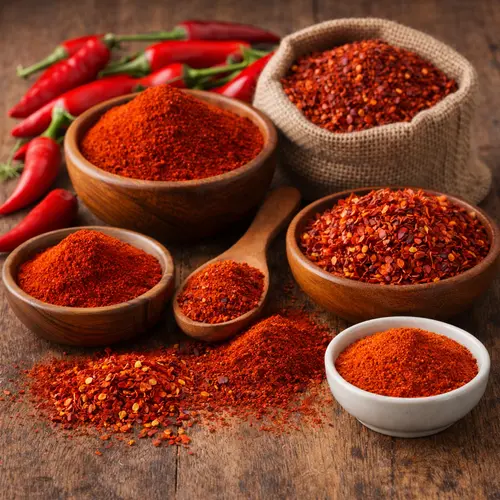
- Fine powder: common for uniform color distribution in blends and sauces
- Granules: lower dust and visual texture in seasoning blends
- Flakes: visible inclusions for rubs and toppings (application-dependent)
- Custom sieve range: match your blending, tumbling, and packaging lines
- Blends: combine paprika with other spices for ready-to-use seasoning bases
Flowability tip: If your line uses augers or vibratory feeders, specifying particle size and moisture targets can reduce bridging and improve dosing consistency.
Color targets (ASTA) & stability
Paprika is frequently specified by ASTA color strength. Higher/lower ranges are chosen based on the shade needed and cost targets. Storage and processing conditions can also affect color retention.
- ASTA color: common spec for standardizing color strength between lots
- Process factors: heat exposure and oxygen/light can impact color over time
- Fat vs. water systems: dispersion differs by application; share your system for best-fit guidance
- Benchmarking: retained samples or target shade references speed up sourcing
If you need tight color matching for a finished product (e.g., snack coating), include your target shade and application details.
Specifications, quality & documentation
Paprika is commonly controlled for color, particle size, and food safety documentation. We support documentation-first sourcing to help your QA and procurement teams validate materials efficiently.
| Area | What buyers commonly specify | What to include in your request |
|---|---|---|
| Type / profile | Sweet, smoked, hot; aroma intensity expectations | Your target flavor direction and whether smoke/heat is required |
| Color strength | ASTA color range or shade benchmark | Target ASTA range (if known) or describe your finished product shade and usage rate |
| Particle size | Fine powder vs granules/flakes; custom sieve range | Your preferred grind and how it feeds through your equipment |
| Moisture & flow | Moisture target (spec-dependent) and flowability needs | Dust control, caking/bridging issues, and blending method |
| Food safety docs | COA (lot), spec sheet, microbial parameters (spec-dependent) | Your QA requirements and whether you need pre-ship COA |
| Allergens | Allergen statement and cross-contact notes where available | Allergen restrictions and facility constraints |
| Certifications | Kosher/organic options where applicable | Which certificates are required and whether copies are needed before sampling |
| Traceability | Lot ID and origin documentation where available | Country-of-origin preferences, audit needs, and record retention requirements |
Documentation availability: COA and spec sheets are common. Kosher/organic certificates are available where applicable and vary by origin and program—request current details with your quote.
Applications
Paprika’s value is often both sensory and visual. The best format depends on whether you need uniform color dispersion or visible texture.
- Seasoning blends: fine powder for uniform color; granules for lower dust
- Snack coatings: consistent color targets and flowability for tumbling systems
- Meat rubs: sweet/smoked profiles; flakes for visible texture
- Soups & sauces: powder for dispersion; specify heat processing and stability needs
- Ready meals: color consistency across batches and shelf-life
- Dry mixes: sieve match for uniform blend and reduced segregation
Process note: Heat and long shelf-life can affect perceived color over time. If your product is color-critical, share your process and shelf-life target to guide selection.
How to request the right paprika
Include these details to speed up quoting and reduce reformulation risk:
- End use: seasoning, snack coating, sauce, rub, ready meal
- Profile: sweet vs smoked vs hot; intensity expectations
- Color: target ASTA range or describe target shade and usage rate
- Grind: powder vs granules/flakes; sieve range if known
- QA needs: documentation package, microbial requirements, screening/metal detection needs
- Certifications: kosher/organic needs; allergen restrictions
- Volume & packaging: annual forecast; bags/cases/pallet preferences
- Destination: USA/Canada delivery region and timeline
Benchmark tip: If you have a retained sample or current spec sheet, copy the key targets (ASTA, grind, micro limits) into your request. It speeds up matching significantly.
Handling, storage & shelf-life planning
Paprika’s color and aroma can be sensitive to light, heat, and oxygen. Proper storage helps preserve color strength and reduce caking.
Storage guidance (general)
- Store cool and dry, away from direct light
- Keep packaging sealed to limit oxygen exposure
- Use FIFO/lot control to maintain consistent color
- Avoid high humidity to reduce caking and flow issues
If your facility has warm storage, mention it—paprika color retention can be impacted by storage conditions.
Manufacturing handling tips
- Match grind size to equipment to reduce dust and segregation
- Use screening/metal detection aligned with your QA program
- For snack coatings, confirm adhesion and distribution in tumblers
- For sauces, confirm dispersion and color development in your base system
Share your blending method (ribbon blender, tumble, liquid slurry) to choose the most compatible format.
Lot-to-lot management: If paprika is color-critical in your finished product, consider retaining samples and documenting usage rates to quickly detect and correct drift.
Related categories
Browse categories where this ingredient is commonly sourced:
If you need blended seasonings that include paprika, mention your target profile and usage application.
Request a quote for Paprika
Share paprika type (sweet/smoked/hot), target ASTA range (if known), grind preference, annual volume estimate, and delivery region (USA/Canada).
Request PricingPrefer email? Write to contact@atlastradehouse.com with subject: Paprika – Quote Request.
FAQ
General guidance—confirm item-specific details at time of quote.
Do you have minimum order quantities (MOQs) for paprika?
MOQs depend on paprika type (sweet/smoked/hot), color/spec requirements (ASTA), grind size, and packaging. Share your annual volume and destination (USA/Canada) and we’ll propose MOQ and lead-time options.
What is ASTA color and why does it matter?
ASTA color is a common measure of paprika’s color strength used to keep product appearance consistent. If your product is color-critical, specify an ASTA range or provide a benchmark description to help match the right option.
Can I request sweet, smoked, and hot paprika options?
Yes. We can source paprika profiles such as sweet, smoked, and hot (heat level dependent), and match formats and color targets for your application.
Do you offer custom grinds or blending?
Often yes. Custom grind/sieve ranges, blending for consistent color and flavor, and private label options may be available depending on volume. Share your target grind and how it feeds through your line.
What documentation is typically available?
Documentation commonly includes COA, spec sheet, allergen statement, and lot traceability. Kosher/organic certificates may be available where applicable depending on origin and program.
Do you ship paprika across the USA & Canada?
Yes. Paprika is commonly supplied in bags, cartons, or bulk cases. Share your destination, receiving constraints, and packaging preference and we’ll recommend practical logistics.
Request pricing
Use the quick intake below to pass key details to our contact page. For faster matching, include paprika type, target color (ASTA), and grind preference.
Prefer email? Send details to contact@atlastradehouse.com with subject: Paprika – Quote Request.