Wholesale ingredient • Documentation support • Custom processing
Palm Oil
Wholesale supply for palm oil with consistent specifications, food safety documentation, and flexible packaging for manufacturers, brands, and co-packers in the USA & Canada. Options may include RBD palm oil, palm olein, palm stearin, and palm-based shortenings or tailored fractions.
Why palm oil is widely used
Versatile performance across frying, bakery, and fat systems—often valued for stability, texture, and cost-efficient functionality.
How it’s purchased
Typically sourced as RBD palm oil or fractions (olein/stearin) in pails, drums, or totes based on throughput and storage setup.
What we help with
Spec matching, documentation packages, packaging selection, and continuity planning for production and seasonal demand.
Overview
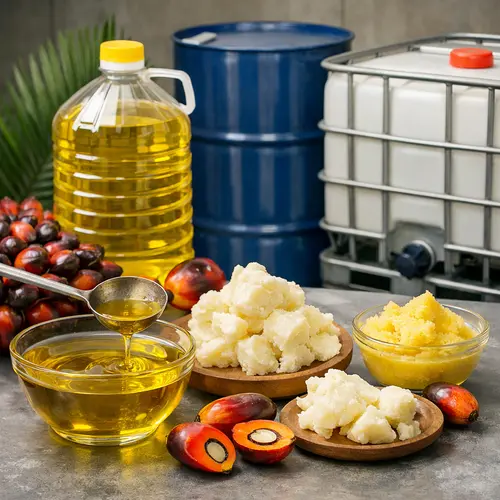
Palm oil is an edible oil commonly used in food manufacturing because it can offer a useful balance of oxidative stability, texture functionality, and processing versatility. It is typically processed into RBD (refined, bleached, deodorized) palm oil, then further separated (fractionated) into palm olein (more liquid) and palm stearin (more solid) to match different applications.
- RBD palm oil: general-purpose refined palm oil used across broad food applications
- Palm olein: commonly used where a more liquid oil is preferred (e.g., frying, cooking oils)
- Palm stearin: used where higher solidity is needed (e.g., bakery fats, shortenings)
- Specialty fractions/blends: tailored melting behavior for confectionery and bakery systems
Selection tip: Choosing the right palm oil format is usually about melting profile, temperature exposure, and finished texture.
If you share your process temperatures and the final product texture you want, we can help narrow the grade and packaging format.
What manufacturers optimize with palm oil
Palm oil is often selected to optimize one or more of the following:
- Oxidative stability: help maintain flavor over shelf-life and reduce rancidity risk
- Frying performance: consistent behavior under heat and repeated use (application-dependent)
- Texture: structure and mouthfeel in bakery fillings, creams, and fat-based systems
- Process consistency: predictable handling for pumping, storage, and dosing
- Cost-efficient functionality: performance balance for large-scale production
- Label planning: align with customer requirements for documentation, traceability, and certifications
Common buyer questions
- “Do we need olein or stearin for this texture?”
- “Will it cloud in cold storage?”
- “Can we get a more neutral odor profile?”
- “What packaging is best for our throughput?”
Grades & formats
Palm oil supply is often specified by processing stage and fractionation. Below is a practical overview of formats buyers request. Exact specs and availability vary by origin and supplier program.
RBD palm oil
Refined, bleached, deodorized palm oil—commonly used as a general manufacturing oil.
- Often selected for neutralized sensory profile
- Used in processed foods, bakery, and industrial food applications
- Can be supplied in different packaging and handling formats
- May be used as a blending component for tailored fat systems
Palm olein (fraction)
More liquid fraction—commonly used for frying and cooking oil applications.
- Often chosen for pourability and frying performance
- Used in snack frying, foodservice, and industrial kitchens
- Cold temperature clarity (clouding) can be an important spec for some uses
- Commonly requested in bulk packaging for throughput
Palm stearin (fraction)
More solid fraction—commonly used for shortenings and structured fat systems.
- Often used in bakery fats and shortenings
- Supports structure and texture in certain confectionery and fillings
- Can be used in blends to adjust melt profile
- Handling and storage conditions matter due to higher solidity
Need a tailored melt profile? Some buyers specify specialty fractions or blends to hit a target melting curve (e.g., bakery cream stability vs. clean melt). Share your target texture and processing temperatures.
Specifications, quality & documentation
Palm oil procurement typically includes both performance specs and documentation requirements. We support documentation-first sourcing to help your QA and procurement teams move quickly from evaluation to scale.
| Area | What buyers commonly specify | What to include in your request |
|---|---|---|
| Format / grade | RBD palm oil, palm olein, palm stearin, palm shortening, specialty fractions/blends | Your application (frying/bakery/confectionery), desired texture/melt behavior, and whether you’re replacing an existing oil |
| Appearance & handling | Color range, clarity, sediment expectations; pourability at target temperatures | Storage temperature, pumping/dosing setup, and any clarity/cloud point requirements |
| Oxidation stability | Common indicators like peroxide value and free fatty acids (oil-dependent and spec-dependent) | Your internal limits (if you have them), shelf-life target, and whether you need lot-to-lot tightness |
| Food safety docs | COA (lot), spec sheet, traceability/lot documentation | Whether you need pre-ship documents, customer audit requirements, and record retention needs |
| Allergens | Allergen statement and cross-contact notes (where available) | Allergen restrictions, facility constraints, and “free-from” requirements |
| Certifications / claims | Kosher options; sustainability/traceability programs when requested; other claims item-dependent | Which certificates you require and whether they must be current at time of shipment |
| Logistics & packaging | Pails, drums, totes; domestic delivery planning for USA/Canada | Destination, receiving capability (dock/forklift), and preferred packaging size |
Documentation availability: COA and spec sheets are common. Certification/traceability documentation depends on the specific supply program and origin—request current details with your quote.
Applications
Palm oil formats are used across many manufacturing environments. The right format depends on whether you want a more liquid oil (olein) or a more structured fat system (stearin/shortening/fractions).
- Frying: palm olein is commonly used where pourability and high-heat performance are needed
- Bakery: palm stearin and palm-based shortenings support structure, aeration, and texture
- Confectionery & fillings: specialty fractions/blends can target melt behavior and stability
- Spreads & sauces: certain palm fractions can support viscosity and mouthfeel
- Snack coatings: stability and flavor neutrality may be key selection criteria
Cold storage / clouding: If your product is refrigerated or exposed to cold distribution, ask about cloud point and clarity performance for the selected fraction.
How to request the right palm oil option
To speed up quoting and reduce reformulation risk, include these details:
- End use: frying, bakery shortening, confectionery fat system, coating oil, etc.
- Processing temps: max temperature exposure and time at temperature
- Texture target: solid fat content needs, “clean melt,” firmness, aeration
- Sensory target: neutral vs. characteristic aroma; color limits
- Packaging: pails/drums/totes; heated storage capability (if applicable)
- Documentation: COA, spec sheet, allergen statement, certifications/traceability requirements
- Volume: pilot volume + annual forecast; delivery region (USA/Canada)
Replacement projects: If you’re switching from another oil or shortening, share what must remain consistent (taste, texture, fry life) and what you want to improve (stability, cost, claims).
Sourcing & sustainability considerations
Many manufacturers have sourcing policies for palm oil. Requirements may include traceability, supplier audits, and certification programs. Because program availability can change based on origin and supplier, confirm your requirements during quoting.
Common procurement requirements
- Lot traceability and country-of-origin documentation
- Supplier documentation packages (COA/spec/allergen)
- Customer audit support (documents and record retention)
- Policy alignment for sustainability/traceability programs (where requested)
If you have a formal policy, include the wording or checklist items so we can match the right supply program.
How to specify your needs clearly
- State whether certification is required or “preferred”
- Share whether you need mass balance vs. segregated/identity-preserved (if applicable to your program)
- Note whether you require documentation with each shipment or annually
- Indicate any restricted origin list or supplier approval process
These details help ensure the quoted option aligns with your internal requirements from day one.
Practical note: Not every palm oil grade is available under every program at all times. If your top choice is constrained, we can often propose alternatives (e.g., a comparable fraction) that meet the same performance goals.
Packaging, storage & logistics
Palm oil and fractions can be sensitive to temperature because some formats are semi-solid at room temperature. Planning storage and handling up front helps avoid delays and improves production consistency.
Packaging (typical options)
- Pails: pilot and smaller production runs
- Drums: common wholesale format for manufacturing
- Totes: higher-volume continuity supply
- Private label: available for select formats and volumes
Tell us your receiving capability (dock, forklift, pallet limits) so we can recommend practical packaging.
Storage & handling planning
- Store away from direct light and strong odors to reduce quality drift
- Keep containers sealed to limit oxygen exposure
- Use FIFO and lot control to keep texture/sensory consistent
- Confirm whether you need heated storage or warming for pumping (format-dependent)
If you need temperature-controlled storage/shipping, include it in your request.
Lead times: Lead time varies by grade, origin, packaging, and policy requirements. Share your target delivery window and we’ll quote realistic options and alternatives if needed.
Related categories
Browse categories where this ingredient is commonly sourced:
If you’re looking for palm-based shortenings or specialty fractions, mention your application and target melt profile in your request.
Request a quote for Palm Oil
Share grade (RBD/olein/stearin), packaging, certifications/traceability requirements, annual volume estimate, and delivery region (USA/Canada).
Request PricingPrefer email? Write to contact@atlastradehouse.com with subject: Palm Oil – Quote Request.
FAQ
General guidance—confirm item-specific details at time of quote.
Do you have minimum order quantities (MOQs) for palm oil?
MOQs depend on the format (pails, drums, totes), grade (RBD, olein, stearin), and whether you require a certified/traceable supply program. Share your destination and annual volume and we’ll propose MOQ and lead-time options.
What palm oil formats do manufacturers commonly purchase?
Manufacturers commonly purchase RBD palm oil, palm olein (more liquid fraction), palm stearin (more solid fraction), and palm-based shortenings or specialty fractions/blends depending on texture and processing needs.
How do I choose between palm olein and palm stearin?
Palm olein is generally preferred when a more liquid oil is needed (often for frying), while palm stearin is more solid and commonly used in bakery shortenings and structured fat systems. Your processing temperatures and texture targets determine the best choice.
Can I request certified or traceable palm oil options?
Yes. Many buyers specify traceability and certification requirements. Availability and documentation depend on origin and supplier program—include your requirements so we can confirm current options.
What documentation is typically available?
Documentation commonly includes COA, spec sheet, allergen statement, and lot traceability. Certifications (e.g., kosher, sustainability/traceability programs, and other claims) may be available depending on the item and origin.
Do you ship palm oil across the USA & Canada?
Yes. Share your delivery region, packaging preference, receiving capability, and any temperature constraints so we can propose practical logistics.
Request pricing
Use the quick intake below to pass key details to our contact page. For detailed procurement requirements (e.g., certification, traceability), include those notes so we can confirm the best-fit supply program.
Prefer email? Send details to contact@atlastradehouse.com with subject: Palm Oil – Quote Request.