Products / Cacao & Cocoa
Organic • Kosher options • Non-GMO
Cacao & Cocoa
Wholesale supply for cacao & cocoa with organic options, documentation support, and custom processing formats for USA & Canada buyers. We help manufacturers, brands, and co-packers source cocoa powders, cacao nibs, cocoa butter, and chocolate formats matched to your flavor profile, color targets, and processing needs.
Flavor
profile alignment by application
Color
natural vs alkalized options
Texture
nib sizing & chocolate formats
Docs
QA paperwork support as available
On this page
Jump to items, specs, application guidance, quality docs, and the quote form.
Typical items in this category
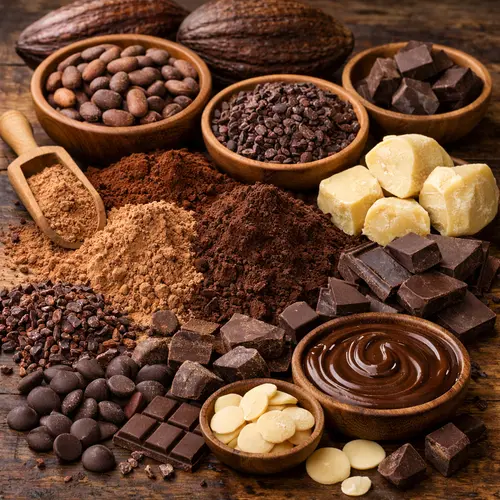
This category includes core cacao and cocoa ingredients used in bakery, confectionery, beverages, and snack systems. Availability, origin, and format vary—request pricing for current options. If you have a spec to match (fat %, color, alkalization level, nib size, chip dimensions), share it to reduce reformulation time.
| Ingredient | Common formats | Typical use cases | Notes |
|---|---|---|---|
| Cacao Beans | Whole beans (origin-dependent) | Chocolate manufacturing, specialty roasting | Share origin and flavor targets if you have preferences |
| Cacao Nibs | Nibs (coarse/medium/fine sizing as available) | Bars, granola, cereal, bakery inclusions | Specify nib size distribution and fines limits |
| Cacao Paste / Liquor | Blocks, wafers/chips (as applicable) | Chocolate bases, confectionery, coatings | Often spec’d by viscosity and flavor profile |
| Cocoa Butter | Blocks, chips, deodorized options (as applicable) | Chocolate, coatings, confectionery, fat systems | Specify deodorized vs natural and handling format |
| Cocoa Powder | Natural or Dutch-process; various fat levels (as applicable) | Bakery, beverage mixes, confectionery, desserts | Specify fat %, color, and alkalization preference |
| Chocolate (chips, dollops, vegan) | Chips, drops, chunks, wafers; vegan options (as applicable) | Bakery inclusions, coatings, snack inclusions | Specify size, melt profile, and dairy-free needs |
Note: Cocoa powders are commonly specified by alkalization (natural vs Dutch), fat %, color, and particle size. Nibs are often specified by size distribution and fines. Cocoa butter and liquor are often specified by format (blocks/chips) and handling requirements.
Spec-driven sourcing
Cocoa and chocolate are sensitive to color and flavor shifts. We help you align specs to reduce changeovers and reformulation work.
- Natural vs Dutch-process options
- Fat % targets for texture and mouthfeel
- Nib/chip sizing for consistent inclusions
Formats for every application
From beverage powders to bakery chips, cacao formats are chosen based on dispersion, melt behavior, and finished texture.
- Powders for mixes and baking
- Butter/liquor for confectionery
- Chips/drops for inclusions
Documentation support
Manufacturer-focused documentation support where available: COA, specs, allergen statements, and applicable certificates for QA onboarding.
- Lot-level COA (where offered)
- Specs aligned to your QA needs
- Traceability by lot and origin
Formats & specification considerations
Cacao and cocoa ingredients can behave very differently depending on fat %, alkalization, particle size, and format. Below are common specification levers buyers use to ensure performance consistency.
Cocoa powder (natural and Dutch-process)
Cocoa powder selection impacts color, flavor, solubility/dispersion, and how your formula reacts with leavening systems. Many buyers standardize a cocoa spec to reduce batch variability.
- Process: natural vs Dutch-process (alkalized)
- Fat %: influences richness, mouthfeel, and texture
- Color level: important for baked goods and beverages
- Particle size: affects dispersion and mouthfeel
- Flowability: impacts automated dosing and handling
Tip: If your product relies on baking soda, natural cocoa may behave differently than Dutch cocoa in the leavening system—share your formula context.
Cacao nibs
Nibs deliver crunch, bitter chocolate notes, and visual inclusions. Consistency is driven by sizing and fines control—especially in bars and granola.
- Size distribution: coarse vs medium vs fine
- Fines/dust: impacts bitterness and mix appearance
- Roast profile: influences flavor intensity (program-dependent)
- Flavor notes: vary by origin and processing
- Blend behavior: match particle size to reduce segregation
Tip: If you see settling/segregation in packaged mixes, aligning nib size with other inclusions can improve uniformity.
Cocoa butter
Cocoa butter is used for chocolate structure and melt profile. It can be supplied in different physical formats for easier handling in production.
- Format: blocks vs chips/wafers for faster melting
- Deodorized vs natural: flavor/odor neutrality needs
- Handling: storage temperature and melting method
- Application fit: chocolate, coatings, confectionery fat systems
- Documentation: COA/specs and certificates where applicable
Tip: If you’re using jacketed kettles or continuous tempering, chip/wafers can improve melt speed and dosing accuracy.
Cacao paste / liquor
Cacao liquor (paste) provides cocoa solids and cocoa butter together. It’s a core input for chocolate and cocoa-forward systems.
- Format: blocks vs chips/wafers
- Viscosity behavior: important for coatings and molding
- Flavor intensity: can vary by origin and processing
- Color: relevant for cocoa-forward products
- Process fit: melting, pumping, and mixing constraints
Tip: If you’re targeting a specific chocolate flavor note, share your desired profile (bold/rounded/fruit-forward) to narrow options.
Chocolate chips, drops, and chunks
Chocolate inclusion formats are typically chosen by size, melt profile, and ingredient constraints (e.g., vegan/dairy-free). Buyers often standardize chip dimensions for consistent distribution and consumer experience.
- Shape/size: mini chips, standard chips, chunks, drops
- Melt profile: bake-stable vs melt-in systems
- Chocolate type: dark, semi-sweet, dairy-free/vegan options
- Appearance: shine and color can matter for toppings
- Allergen constraints: confirm dairy and cross-contact policies
Tip: If you need bake-stable chips, specify your bake temperature/time so the right inclusion can be proposed.
Common documentation needs
Cacao and cocoa buyers often require consistent documentation for QA onboarding and ongoing receiving.
- COA (lot-level where offered)
- Specification sheets
- Allergen statements (especially for chocolate formats)
- Non-GMO statements (program-dependent)
- Organic and kosher certificates where applicable
Tip: If you have a supplier approval questionnaire, include it with your quote request to speed up review.
How buyers use cacao & cocoa
Cacao and cocoa ingredients appear across bakery, beverages, confectionery, and snacks. Buyers typically choose format based on how the ingredient will be processed—dispersed in water systems, mixed into dough, melted for coatings, or used as inclusions.
Bakery
- Cocoa powder for cakes, brownies, cookies
- Chips/chunks for inclusions
- Nibs for crunch-forward products
Beverage mixes
- Cocoa powder for hot cocoa and RTM blends
- Particle size for dispersion and mouthfeel
- Color and flavor intensity standardization
Confectionery
- Liquor and butter for chocolate systems
- Coatings and fillings
- Controlled melt and viscosity behavior
Bars & snacks
- Nibs and chips for inclusions
- Cocoa powder for flavor systems
- Texture control via sizing
Natural vs Dutch-process cocoa: practical comparison
Both natural and Dutch-process cocoas are widely used. The “best” choice depends on your formula, target color, and the flavor profile you want. Here’s a practical guide to support your spec selection.
| Cocoa type | Typical traits | Best for | Spec focus | Notes for formulators |
|---|---|---|---|---|
| Natural cocoa | Brighter cocoa note; often lighter brown | Classic bakery, formulations tuned for its behavior | Fat %, color, particle size | Often chosen where a sharper cocoa profile is desired |
| Dutch-process (alkalized) cocoa | Smoother profile; often darker color | Deep color systems, smoother cocoa perception | Alkalization level, color, fat %, flowability | Often used to hit darker visual targets and reduce perceived acidity |
If you’re switching between natural and Dutch cocoas, test for differences in color and baking system behavior. Provide your application details and we’ll help align a spec that matches your target.
Quality, food safety & documentation
Manufacturers typically require consistent paperwork for onboarding and receiving release. Documentation availability varies by product and supplier program, but we can often support standard files requested by QA teams.
Common documents (as available)
- Certificate of Analysis (COA) by lot
- Specification sheets
- Allergen statements (especially chocolate formats)
- Non-GMO statements (program-dependent)
- Organic certificates for organic items
- Kosher certificates for certified programs
Common QA focus areas
- Fat % and moisture (powders)
- Color consistency and alkalization (cocoa powder)
- Particle size and flowability
- Foreign material controls (nibs/beans)
- Traceability fields (lot coding, origin)
If you have a vendor onboarding packet, attach it to your inquiry to speed up review.
Storage & handling guidance
- Keep sealed and protected from humidity
- Store cool and dry, away from strong odors
- Use FIFO rotation and record lot codes
- Manage temperature for cocoa butter and liquor
Packaging & logistics for bulk cacao and cocoa
Packaging depends on the product format. Powders and nibs are commonly packed in bags; cocoa butter and liquor may be packed in blocks, cartons, or chip/wafers formats for easier melting. Share your receiving constraints to align packaging and delivery.
Typical packaging
- Bags for cocoa powder and nibs
- Cartons/blocks for butter and liquor
- Chips/wafers for faster melting (as applicable)
Exact pack sizes vary by program—tell us your preferred pack and pallet constraints.
Lead time drivers
- Origin availability and program schedules
- Certification verification (organic/kosher)
- Format requirements (chips/wafers vs blocks)
- Lane capacity and appointment scheduling
Receiving checklist
- Delivery hours & appointment policy
- Dock type (standard dock vs ground unload)
- Labeling requirements (lot, PO, item code)
- Storage conditions (cool/dry; temp control for fats)
Request a quote for cacao & cocoa
Share the details below and we’ll respond with available options for your target volume in the USA or Canada. This form pre-fills into your main contact workflow for faster handling.
Quick quote details
FAQ
Do you offer organic options for Cacao & Cocoa?
Many items in this category have organic options. Share the item, format, volume, and delivery lane, and we’ll confirm availability by origin and supplier program.
Can you supply bulk packaging?
Yes—bulk and wholesale pack sizes are available depending on the ingredient. Powders and nibs are commonly supplied in bags, while butter and liquor may be supplied in blocks or chips/wafers. Tell us your handling preference.
Do you support custom processing?
Often yes. Depending on the product, we can support nib sizing, cocoa powder processing options (natural vs Dutch), and a range of chocolate inclusion formats (chips/drops/chunks) suited to your application.
What’s the difference between natural cocoa and Dutch-process cocoa?
Natural cocoa is typically more acidic with a brighter cocoa note, while Dutch-process cocoa is alkalized for a smoother profile and often darker color. The best option depends on your formula and desired sensory outcome.
What specs matter most for cocoa powder?
Buyers commonly specify fat %, color, alkalization preference, particle size, and flowability. Tell us your application (bakery, beverage, confectionery) so we can align the best spec.
Can you provide documentation for QA onboarding?
Where available, we can provide typical documents such as COA, specification sheets, allergen statements, and applicable certificates (organic/kosher). If you have a vendor onboarding packet, include it with your request.
Ready to source cacao & cocoa?
Whether you need cocoa powder for baking and beverages, cacao nibs for inclusions, or cocoa butter and liquor for confectionery systems, we can help align the right specs, documentation, and packaging for your production program.
For urgent requests, include item, key specs (natural/Dutch, fat %, color), volume, destination, and any certification needs for the fastest response.